Introduction
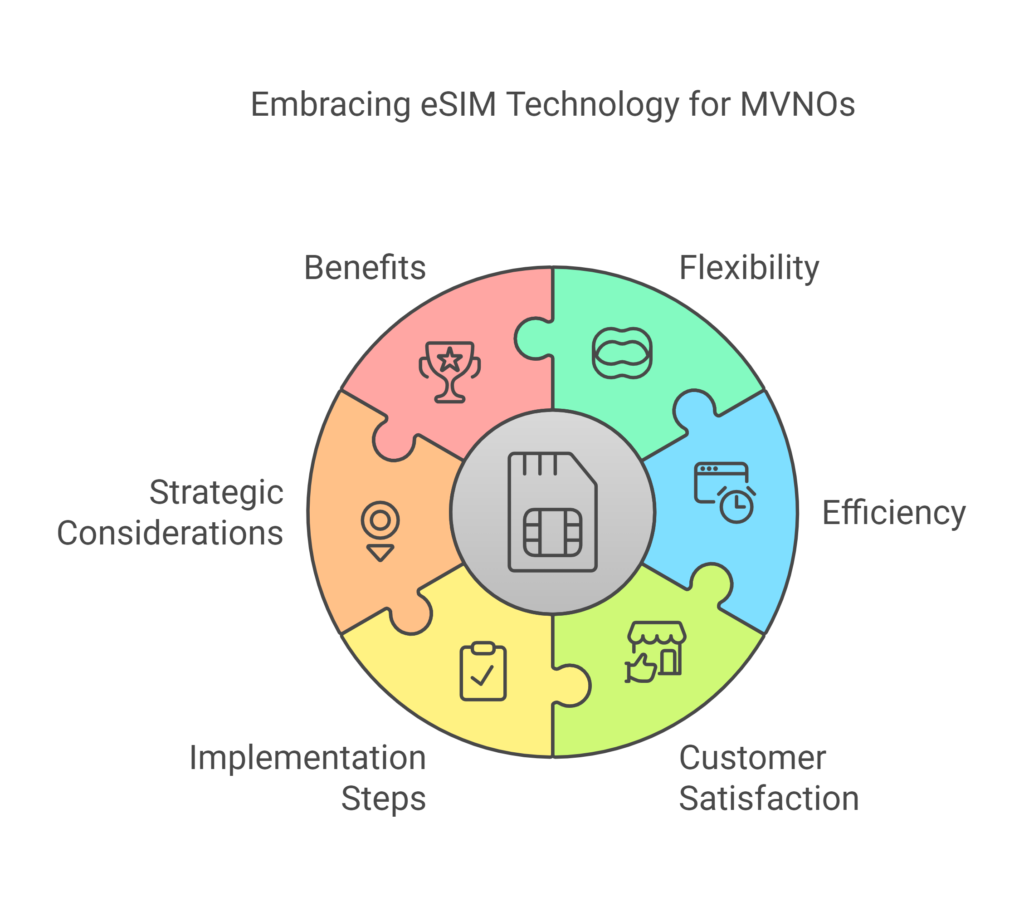
MNOs and MVNOs are using cutting-edge technologies to stay competitive as the business advances quickly. One of these is the eSIM technology. For MVNO eSIM providers, eSIM technology is a strategic aspect that allows for endless flexibility, efficiency, and increased client happiness. This blog will serve as a comprehensive guide for MVNOs wishing to adopt eSIM technology by highlighting important steps, considerations, and benefits of implementing the digital eSIM experience.
What is MVNO eSIM Implementation?
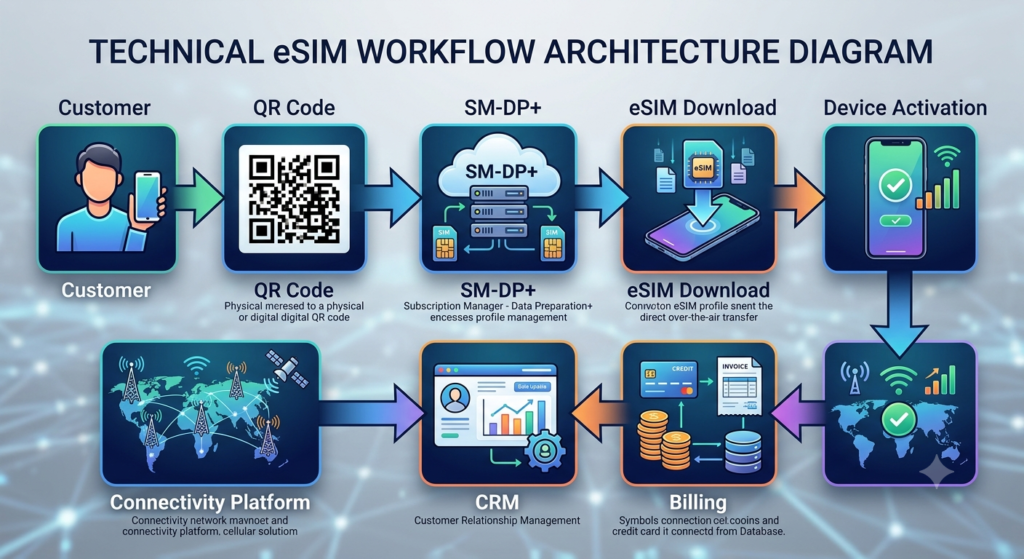
MVNO eSIM implementation is the process of enabling an MVNO to remotely provision, activate, and manage subscriber profiles using GSMA-compliant eSIM infrastructure, including SM-DP+, remote SIM provisioning (RSP), backend integrations, billing systems, and secure lifecycle management.
What You Will Gain from This Article
By reading this article, you will:
- Understand the core benefits and opportunities that eSIM technology offers for MVNOs.
- Learn the necessary steps and best practices for successful eSIM implementation, including strategic planning, Esim Provisioning, Esim Integration, and Esim Security considerations.
- Discover how Spenza can streamline your eSIM deployment, helping you to launch a competitive, future-proof mobile service faster.
The eSIM Opportunity for MVNOs
The introduction of eSIM technology has triggered a huge revolution in the mobile sector. For MVNO eSIM providers, eSIM offers significant advantages over traditional physical SIM cards. First and foremost, eSIM enables remote provisioning and over-the-air activation of SIM cards rather than physical distribution, resulting in decreased operational expenses.
Furthermore, eSIM technology provides users with unparalleled flexibility in switching data carriers while preserving their mobile phone numbers, mainly helping international travellers gain local access without suffering high roaming fees.
This digital-first approach not only improves the consumer experience but also builds a solid platform for MVNOs to remain relevant in a fast-paced and dynamic telecommunications market.
Modern MVNOs are increasingly using IoT connectivity platforms to manage millions of connected devices alongside consumer subscriptions. Choosing the right platform enables centralized provisioning, lifecycle management, and real-time visibility across global deployments.
Defining Your eSIM Strategy
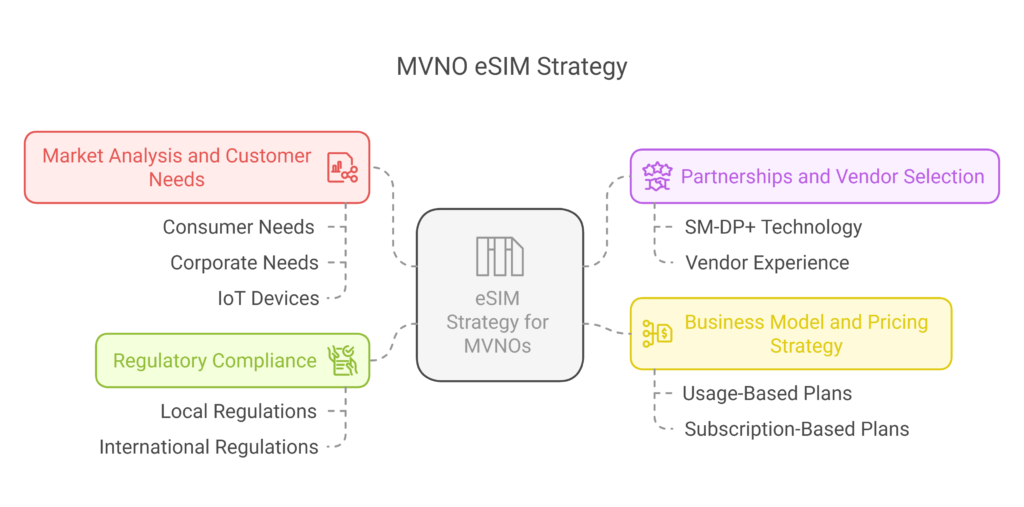
Before getting into the technical details, each MVNO must first have a solid eSIM strategy. This strategic blueprint serves as the foundation for successful execution and should address both technical and business aspects.
- Market Analysis and Customer Needs: Begin by analyzing and understanding the connectivity needs of your target market segments. Examine how eSIM can meet these needs, whether for consumers, corporations, or IoT devices. Operators targeting connected products should also understand IoT eSIM providers, since enterprise deployments often require global connectivity, multi-network redundancy, and remote lifecycle management.
- Partnerships and Vendor Selection: Choose partners who provide comprehensive solutions for MVNO eSIM implementations, including SM-DP+ (Subscription Manager – Data Preparation) technology. Working with experienced vendors ensures efficient Esim provisioning and dependable profile management.
- Business Model and Pricing Strategy: Create flexible pricing and service models that take advantage of the operational benefits of eSIM. Integration with usage-based or subscription-based plans can greatly improve your market differentiation.
- Regulatory Compliance: Verify that your plan adheres to local and international telecommunications regulations, with a special focus on privacy and secure identification methods. Compliance is critical while deploying remote provisioning systems and protecting user data.
eSIM Provisioning: Setting Up the Framework
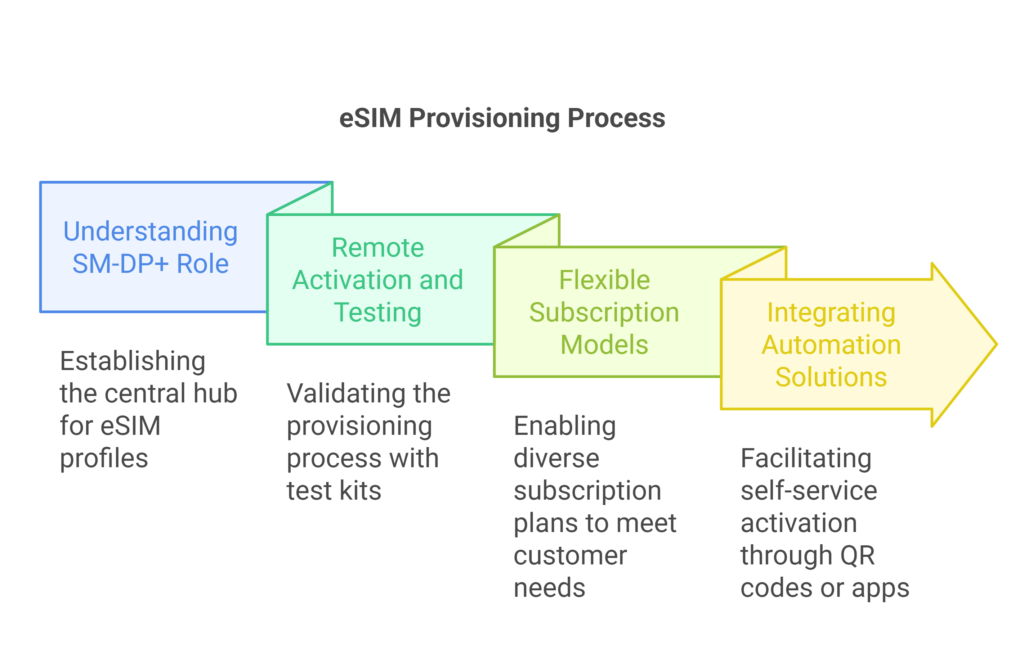
Effective eSIM. Successful eSIM rollouts rely heavily on proper provisioning. Provisioning refers to the processes for remotely activating, updating, and managing eSIM profiles on customer devices.
- Understanding the SM-DP+ Role: The SM-DP+ platform is critical for handling eSIM profiles. It serves as the central hub for profiles, which are safely saved and then downloaded to devices upon activation. Creating a seamless link between your backend systems and SM-DP+ guarantees efficient profile delivery.
- Remote Activation and Testing: Set up testing techniques to validate the provisioning process. For example, acquiring a test kit containing multiple eSIMs and trial data packages can assist you in resolving any issues prior to a full-scale implementation.
- Flexible Subscription Models: Use your provisioning system to enable multiple subscription models, providing personalized plans that appeal to diverse customer groups. This kind of flexibility is critical because it allows MVNOs to quickly modify offers based on market trends or consumer preferences.
- Automation and Self-Service: Integrate automation solutions that enable self-service activation using QR codes or through an app, resulting in a frictionless customer experience. Automation minimizes manual intervention, decreases errors, and accelerates the activation process.
Successful deployments rely on remote SIM provisioning (RSP) to securely download and update subscriber profiles over the air without replacing physical SIM cards. RSP significantly reduces operational costs while improving activation speed.
Seamless eSIM Integration with Existing Systems
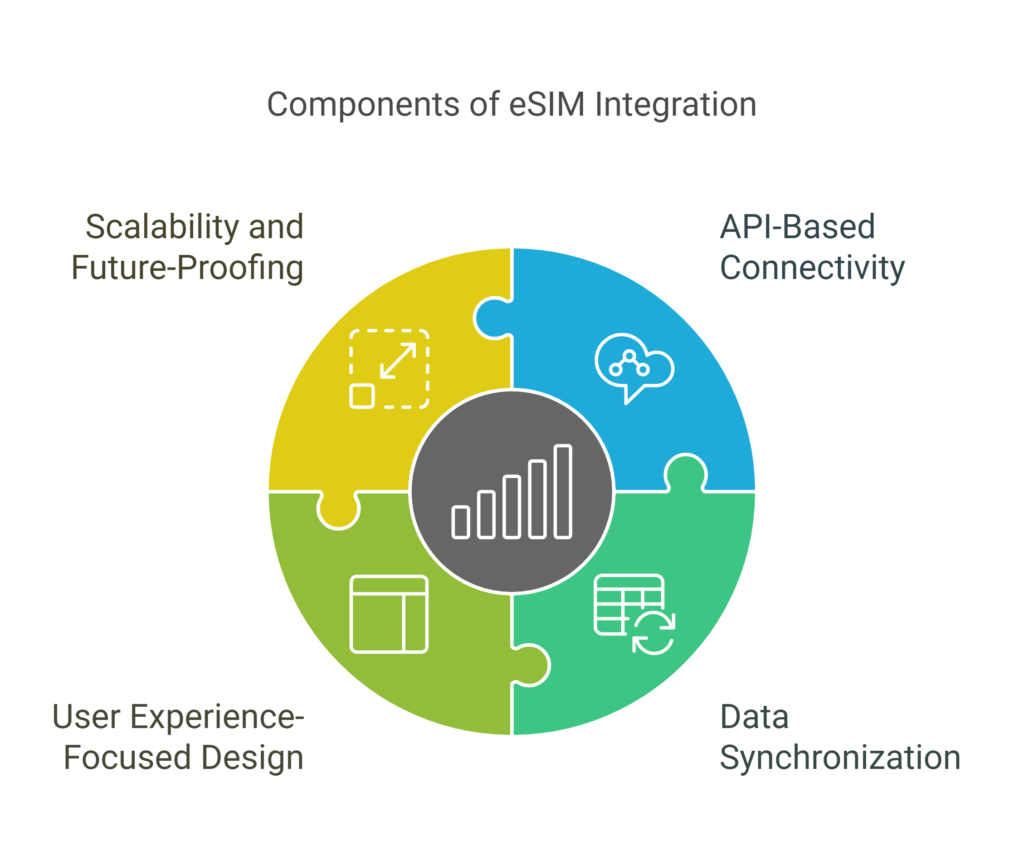
Effective eSIM integration ensures that your MVNO solution seamlessly integrates with existing systems, while provisioning sets the framework. Seamless integration includes the following aspects:
- API-Based Connectivity: Use trustworthy connectivity APIs to connect eSIM management to billing, customer relations, and network management applications. Spenza, for example, provides connectivity API-based platforms that allow you to manage several carriers from a single pane of glass.
- eSIM orchestration : Many operators also deploy an eSIM orchestration platform to automate carrier integrations, SIM lifecycle management, and provisioning workflows from a unified interface.
- Data Synchronization: Data must flow seamlessly between core systems and the eSIM platform. This synchronization enables real-time tracking of usage data, ensures billing accuracy, and maintains up-to-date customer records.
- User Experience-Focused Design: Design the user interface to allow for a smooth onboarding and activation process. MVNOs can distinguish themselves by offering a very user-friendly customer interface through which consumers can manage their subscriptions, check user statistics, and handle any issues that arise.
- Scalability and Future-Proofing: Create solutions that are scalable as the subscriber base grows. A scalable eSIM integration enables you to swiftly deploy new services, easily accommodate new carriers, and adapt to market shifts without requiring an expensive infrastructure redesign.
Maintaining Robust eSIM Security Measures
Security is a top priority when introducing any digital technology, and eSIM is no exception. MVNOs must guarantee that their eSIM solutions meet the highest security requirements.
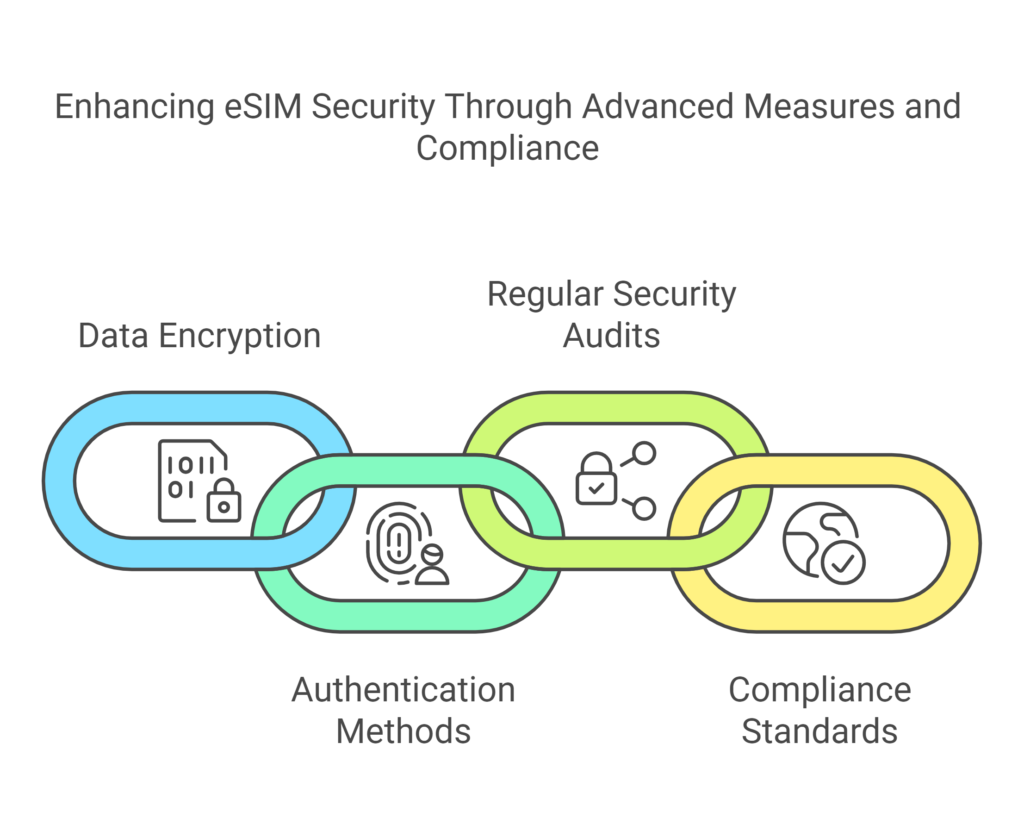
- Data Encryption and Secure Storage: Implement cutting-edge encryption algorithms to safeguard eSIM profiles stored on SM-DP+ systems and transmitted to consumer devices. This protects important customer information from possible breaches.
- Authentication Methods: Use multifactor authentication and token-based methods to verify user identities during the eSIM’s activation. This is crucial for preventing unauthorized or illegal access and making sure that only authenticated users have the ability to activate or modify their profiles.
- Regular Security Audits: Regular security audits and penetration tests should be done on your eSIM system to identify and correct possible vulnerabilities. Continuous monitoring and assessments help maintain a good security posture.
- Compliance with Global Standards: Ensure that, to protect your eSIM activities, you abide by the relevant global standards and regulations on eSIM technologies established by the organizations like GSM Association. This will increase consumer confidence and reduce the possibility of legal entitlement due to customer adverse reactions.
How Spenza Accelerates Your MVNO Journey
Implementing cutting-edge MVNO eSIM solutions is a complex process that involves precision, efficiency, and reliability. Here’s how collaborating with Spenza can revolutionize your strategy:
1. End-to-End Platform
We optimize every aspect of eSIM deployment, concentrating on efficiency and security. Our technology streamlines the entire process, from early planning and eSIM provisioning, where digital SIM profiles are securely produced and enabled, to seamless integration across devices and networks.
2. Connectivity Management API
Our reliable API simplifies global connectivity management, effortlessly integrating with your existing systems to enable straightforward control over your wireless services. Designed for efficiency and scalability, it helps you manage various carriers worldwide, streamline operations, and provide seamless, secure, and dependable connectivity across your network.
3. Scalable Reselling
Our platform lets you effortlessly resell mobile services, giving a dynamic and adjustable service portfolio. With built-in scalability, you can expand your MVNO business, unlock new opportunities, and give outstanding value to your customers—efficiently and effortlessly.
4. Global Reach
We offer global reach, connecting you to over 200 countries and providing a full range of mobile services. This vast coverage guarantees that you can provide reliable and diverse mobile solutions to customers worldwide, boosting your market presence and operational capabilities.
5. Innovative Dashboard
Our all-in-one dashboard provides a consolidated platform to monitor connectivity and client administration in real time. With a unified interface, you can monitor performance, manage devices in one place, and make data-driven choices efficiently—all while reducing unnecessary costs.
6. Future-Proofing Your Business
It can be complex when it comes to adapting to new technologies; our platform simplifies the transition. Engineered to scale and flexible, it meets today’s demands while preparing for future market shifts. With revolutionary solutions such as 5G, you remain agile, robust, and ready for the evolving digital landscape.
With Spenza, you get experienced support and advanced tools to launch and maintain your eSIM-based solutions fast and efficiently. Elevate your MVNO management experience and join industry leaders revolutionizing telecommunications with cutting-edge technological solutions.
Enterprises preparing for next-generation networks should evaluate the impact of 5G on enterprise connectivity, especially for low-latency applications, private networks, and edge computing deployments.
Organizations evaluating deployment costs should also review MVNO launch costs before selecting technology partners, carrier agreements, and provisioning infrastructure.
Conclusion
Implementing eSIM technology requires a tailored plan for installation and deployment. This plan must consider market needs, establish fully vetted provisioning methods, integrate seamlessly with existing systems, and ensure security. An MVNO that clearly defines its eSIM vision, implements effective provisioning programs, and maintains a single point of integration while prioritizing security can fully leverage the benefits of digital eSIM technology. This approach reduces operational costs, enhances the user experience, and positions your mobile service for expansion in today’s competitive telecom environment.
FAQs
Ready to integrate eSIM technology into your MVNO operations with Spenza’s comprehensive platform? Contact us now to future-proof your connectivity solutions.