



Introduction
Launching an MVNO in 2026 requires more than securing carrier access—it demands a clear go-to-market strategy, scalable technology, and a differentiated customer experience. As digital-first mobile services continue to grow, successful MVNOs are focusing on niche markets, eSIM-enabled onboarding, cloud-native platforms, and flexible pricing models to compete with traditional operators.Global 5G subscriptions are expected to approach 3 billion by the end of 2026, enabling new MVNOs to launch with cloud-native architectures, eSIM-first onboarding, and advanced digital services from day one.
Whether you’re building a consumer, enterprise, or IoT-focused MVNO, success depends on choosing the right market segment, partnering with an experienced MVNE, validating your financial model, and deploying technology that can scale globally from day one.
This guide outlines five proven go-to-market strategies that help modern MVNOs launch faster, reduce operational complexity, and build sustainable long-term growth.
What Is an MVNO Go-to-Market Strategy?
An MVNO go-to-market (GTM) strategy is the commercial and operational plan used to launch and grow a Mobile Virtual Network Operator. It combines market positioning, customer segmentation, pricing, technology selection, MVNE partnerships, marketing, and financial planning to acquire subscribers and scale profitably.
What Would You Get by the End of the Article?
- A strong roadmap to start or grow your MVNO in 2025.
- Actionable strategies that are working now in the MVNO space.
- Deep understanding of the MVNO go-to-market strategy.
- Clear reasons why a strong MVNE partner matters.
- A breakdown of key tech and financial planning elements.
- How Spenza helps you go live faster, better, and globally.
Strategy 1: Nail Your Market Segmentation and Value Proposition
The first rule of a strong MVNO go-to-market strategy is clarity. That means knowing your target user inside out. Don’t try to be everything to everyone. The best MVNOs in 2025 focus on one thing: solving a very specific need.
Are you building for gig workers who want unlimited data? Are you targeting IoT device makers that need wide coverage? Or maybe your MVNO business model supports parents who need parental control features in their mobile plans.
Don’t aim too broad. Your MVNO needs to solve one problem for one audience, really well. If you’re targeting gig economy workers, focus on unlimited data and flexible plans. For smart device makers, low-latency and global roaming is the hook. Identify top user personas and validate their needs through surveys or pre-launch tests.
Align Tech to User Expectations
Choose a platform that allows fast iteration. A robust MVNO platform supports dynamic plan creation, user-level customization, and deep analytics for retention triggers. Run usage A/B tests and track churn tied to pricing or feature changes.
For companies targeting IoT users, here’s how MVNOs can capitalize on IoT connectivity in 2025, a great breakdown of niche segmentation and tech pairing for connected devices.
Summary:
- Start narrow: dominate a use case or community.
- Build a message that sells your technical advantage.
- Use feedback loops via your MVNO platform.
Plus, Prepaid continues to dominate the U.S. MVNO market because it offers pricing flexibility, lower customer acquisition barriers, and simplified billing. Many successful digital-first MVNOs combine prepaid plans with eSIM activation and self-service account management to improve customer experience. That shows the growing need for flexibility and no-commitment plans in your offering.
Strategy 2: Secure a Strategic MVNE Partnership
If you’re wondering how to start a MVNO, start here. Don’t call the big MNOs first. That path is slow, expensive, and packed with hurdles.
Instead, partner with a solid MVNE. A modern MVNE partner like Spenza gives you instant access to the network tools and carrier relationships you need. You’re not building from scratch, you’re building smart.
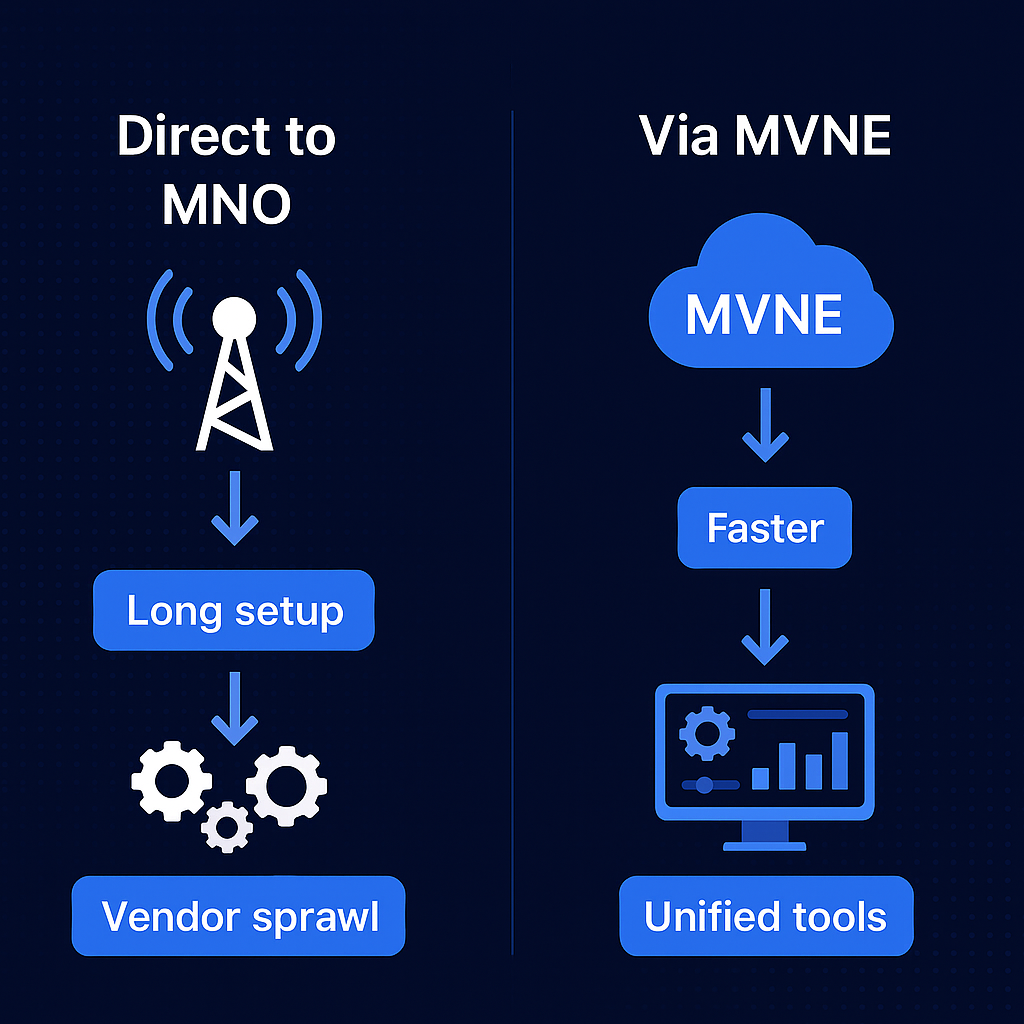
MVNEs help you with:
- SIM and eSIM provisioning.
- Access to pre-integrated carriers.
- Billing systems that are ready to go.
- Usage analytics that tell you what’s working.
- Regulatory compliance baked in.
This reduces risk and cuts your time to market.
A strong MVNE partnership isn’t just about tech. It’s about experience. You get support from people who know how to start a MVNO, scale it, and make it last.
Need help choosing between MVNEs and other backend providers? Read MVNE vs MVNA vs MNO: Which is Best for Launching Your MVNO in 2025? for a full comparison.
Strategy 3: Prioritize a Digital-First Customer Experience
Customers today want everything digital, no paper forms, no long wait times. Your MVNO go-to-market strategy must center around a digital-first journey.
- This means:
- eSIM solutions that let customers activate in minutes.
- App-based self-service for plan changes, top-ups, and support.
- Real-time notifications for usage.
Your MVNO platform must support this. The goal? A fast, clean, app-like experience that doesn’t need human help unless it’s critical.
The digital-only MVNO trend is exploding. Digital-first MVNOs continue to gain market share by combining eSIM activation, mobile self-service, AI-powered customer support, and app-based account management to deliver faster onboarding and lower operating costs than traditional retail models.
The growing demand for virtual provisioning is explained further in How eSIM Is Disrupting the MVNO Market in 2025, including use cases and implementation tips.
Strategy 4: Build a Rock-Solid Financial Case
A good MVNO doesn’t just work, it also makes money. You need to know your costs, your revenue models, and your growth targets. Here’s what to track:
| Financial Element | Why It Matters | What to Do |
|---|---|---|
| Subscriber Acquisition Cost | Tells you if your marketing is working | Track spend vs signups weekly |
| Average Revenue Per User | Measures profitability | Segment by customer type |
| Churn Rate | Shows retention issues | Build loyalty plans |
| Operating Costs | Impacts runway and burn rate | Use usage-based billing |
| Break-even Point | Tells you when profit starts | Run monthly forecasts |
Without this clarity, you’re guessing. That’s not how to start an MVNO that lasts. Build your case early. Review it monthly. Make adjustments often.
Strategy 5: Invest in Scalable Technology and Vendor Management
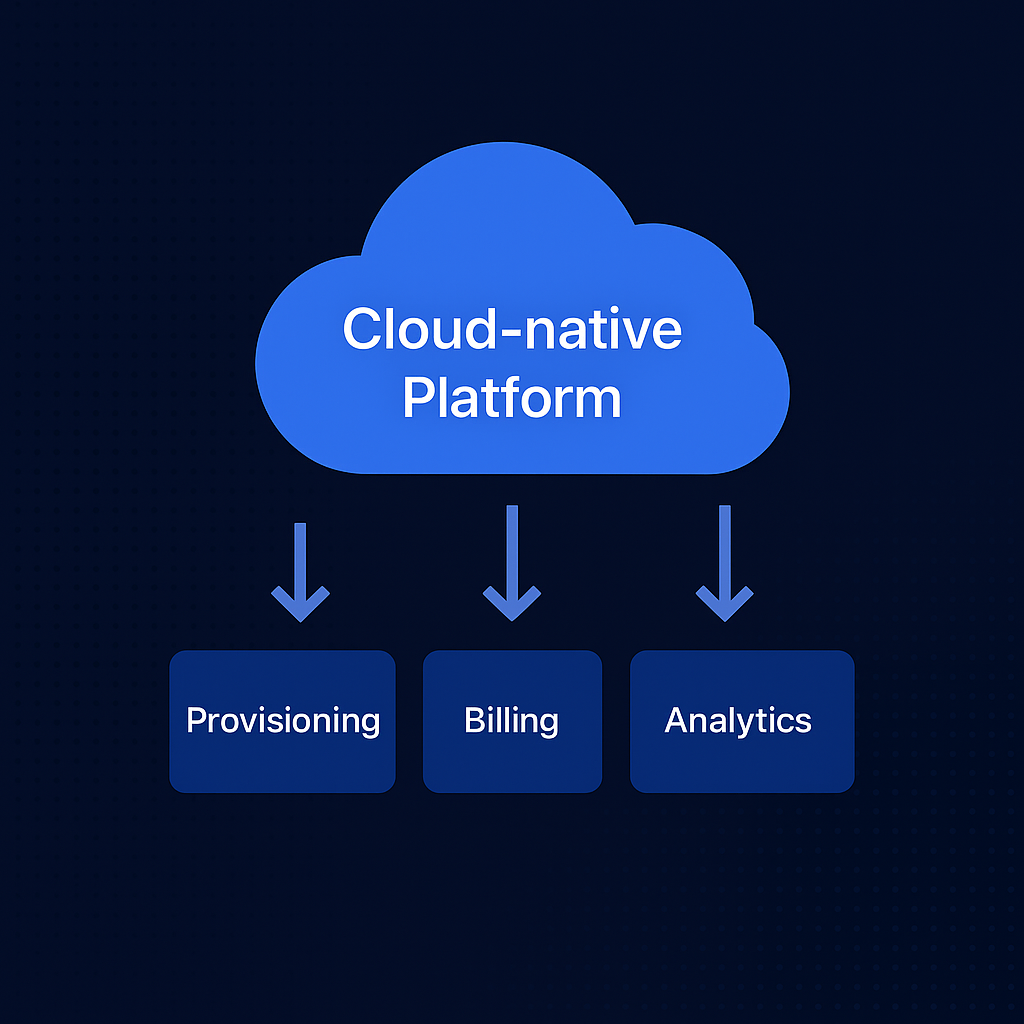
Your tech stack can make or break your launch. If your systems don’t scale, your service breaks as you grow. That kills trust. So you need:
- A cloud-native MVNO platform with API-first design.
- Real-time billing and OSS/BSS tools.
- Multi-carrier support for better global reach.
- Device-level control and diagnostics.
This isn’t optional. It’s a must. As more MVNOs go global and serve IoT, scale needs to be part of day one planning, not year two.
Look for tools that support eSIM solutions. And yes, you need strong vendor control. Don’t manage multiple contracts, dashboards, or billing files. Get a platform that does it all.
If you want to go deeper into backend scalability, read the Rise of Cloud-Based MVNE Platforms in Modern Telecommunications to understand how modern infrastructure supports expansion.
Why Spenza is the Smartest Choice for MVNO Builders
Spenza is not just another MVNE partner. It’s the backbone for MVNOs that want speed, global access, and seamless control. It handles every layer of your telecom stack, from SIM activation to billing to carrier negotiation.
Why Spenza?
- API-first platform, built for scale
- Integrated eSIM solutions and SIM provisioning
- Usage analytics with real-time reporting
- Global coverage in 190+ countries
- White-label-ready onboarding flows
Whether your MVNO business model supports consumers or connected devices, Spenza has the tech to match.
How Spenza Helps Launch Faster
The old way? Negotiate with MNOs, hire system integrators, buy billing platforms, wait months. With Spenza, you skip the delays and move straight into execution. Everything is built to scale from day one. That means fewer mistakes, faster feedback, and a product that’s ready to win in the market.
If you’re launching in a competitive region, Spenza helps you stand out, through agility, network depth, and real-time analytics that let you course-correct before problems grow.
Proven MVNO Use Case: Smart Devices in Motion
Butlr, a company that builds spatial intelligence solutions using smart sensors, needed to deploy thousands of devices across multiple countries. Their technology relies heavily on always-on, real-time data transmission. That required a mobile connectivity setup that could scale fast, work globally, and stay simple to manage.
The Challenge
Butlr faced several serious hurdles:
- Managing multiple carrier contracts created friction and operational delays.
- Traditional SIM provisioning slowed down rollouts.
- There was no centralized view of data usage, device activity, or billing.
These problems created deployment delays and increased the cost of expansion. They needed a way to unify and simplify their telecom layer without sacrificing control.
How Spenza Helped
Spenza offered a full-stack solution that changed the way Butlr deployed and managed its devices. Here’s what worked:
- Instant global connectivity through Spenza’s multi-carrier, cloud-native MVNO platform.
- API-first SIM and eSIM provisioning, allowing remote activation and configuration of devices.
- Consolidated billing and usage dashboards, so Butlr’s operations and finance teams could track everything in real time.
With Spenza, Butlr didn’t have to deal with multiple platforms, carrier negotiations, or billing systems. Everything worked from one interface.
The Results
| Outcome | Description |
|---|---|
| Deployment Time | Reduced from weeks to just days across new regions. |
| Operational Overhead | Lowered by removing redundant telecom contracts and manual processes. |
| Real-Time Visibility | Full tracking of device usage, data costs, and activity by country and SIM. |
| Scalability | Rolled out thousands of devices with zero infrastructure bottlenecks. |
Spenza gave Butlr the tools to launch smarter, scale faster, and keep things under control, across borders, with full transparency. It wasn’t just about connectivity. It was about giving Butlr the operational edge it needed to grow.
Final Thoughts
In 2026 and beyond, successful MVNOs will differentiate themselves through focused market positioning, digital-first customer experiences, scalable cloud-native platforms, and flexible connectivity services. Organizations that combine these strategies with strong MVNE partnerships and data-driven decision-making will be better positioned to launch quickly, scale efficiently, and compete in an increasingly software-defined telecom market.
FAQs
Ready to launch? Book a call with our team today and put your MVNO go-to-market strategy into action.


