eSIM orchestration is the control layer that decides which connectivity change a device should get, carries it out through remote SIM provisioning, checks that service actually works afterward and records the result. Provisioning moves a profile onto an eUICC. Orchestration adds the rules around that move: which devices are eligible, who approved the action, what evidence counts as success and what happens when a step fails.
For an IoT fleet, that difference matters because a successful API response is only the first step toward working service. This guide defines orchestration, separates it from remote SIM provisioning and connectivity management, maps the SGP.32 roles, and then covers the operating side: policies, campaigns, verification, recovery and how to run a pilot. It builds on the eSIM overview.
Last verified 2 November 2026.
What is eSIM orchestration, and what does it do beyond provisioning?
Orchestration connects business decisions with profile operations and service verification across a fleet. A useful picture is a runbook that the platform executes: choose an eligible profile, reach the device, confirm that it registered and moved data, and recover or escalate when it did not. Remote SIM provisioning supplies the secure mechanism. Orchestration supplies the decisions, the sequencing and the audit record.
Five jobs separate it from a one-off activation:
- Eligibility: checking that a device, market and approved profile fit together before any change is sent.
- Authority: recording who or what requested the change, and under which policy version.
- Execution: sending the profile operations and tracking each one through to a final state.
- Verification: confirming the profile, the network registration and the application behavior, not only the download.
- Exception handling: retrying, pausing, recovering locally or handing a case to a named owner.
The standards do not define most of this. They define how profiles are delivered and managed. Which carrier a device should use, when to change, and how to treat a failure are product and operating decisions, so two platforms that both say “SGP.32 ready” can behave very differently.
How is eSIM orchestration different from RSP, a CMP and eSIM management?
The terms overlap in marketing, and one product can contain several of them. It is more reliable to compare responsibilities than product labels.
| Function | Primary task | What a buyer should verify |
|---|---|---|
| Remote SIM provisioning (RSP) | Download and manage supported profiles | Compatible device, profile source and operation results |
| eSIM management | Keep each profile correctly configured, enabled and healthy | Per-device state, and how drift is detected |
| Connectivity management platform (CMP) | Maintain inventory, usage and service controls | Data freshness, carrier coverage and control permissions |
| Orchestration | Coordinate approved changes and exceptions across the fleet | Eligibility checks, recovery behavior and outcome evidence |
| Commercial operations | Manage subscriptions, charges and reconciliation | Entitlements, cancellation state and invoice records |
Source: editorial evaluation framework informed by the GSMA architecture references below. Product boundaries vary by implementation.
A CMP can include automation and policy features, and RSP supports repeated remote operations across a device lifecycle, not only the first one. Buying a separate orchestrator is justified when it fills a real gap, such as coordinating one change across profile, carrier and application systems. For the platform side, see our comparison of leading IoT connectivity management platforms.
Decision rule: describe the workflow you need before choosing a category. Require a named system and an owner for each step, including the point where a failed change becomes a support case.
A short example shows the difference between management and orchestration. Management asks whether each sensor has a valid, active profile. Orchestration asks whether a group of sensors should change plan or profile at all, who approved that, and whether the ones that changed are still reporting. It also flags the devices where the change failed instead of leaving them in an unknown state.
Where does RSP aggregation fit?
RSP aggregation puts supported profile sources and carrier integrations behind one operating interface, so an enterprise application maintains fewer separate workflows. It does not create universal operator access. Available profiles, commercial agreements, device compatibility and the scope of each integration still set the limit. Our guide to deploying multi-network eSIM with RSP aggregation covers the mechanics.
A good aggregation layer normalizes inventory identifiers, order requests, operation status and error handling. Underlying carrier systems expose different capabilities and report events at different times, so record those differences in the integration contract. Otherwise a shared status field hides missing information.
Keep three states apart, because they arrive through the same endpoint:
- An order accepted by a marketplace is not a profile installed on the eUICC.
- A profile installed on the eUICC is not a carrier account that can use data.
- A carrier account that can use data is not an application that is reporting again.
Check who owns the subscription, who can request or revoke profiles, who receives the invoice and who handles a disputed operation. Consolidated billing and profile aggregation are separate capabilities, even when one supplier offers both.
How do SGP.32 roles map to an orchestration design?
SGP.32 defines the IoT remote provisioning architecture for devices with network or user-interface constraints. The IoT Profile Assistant (IPA) acts as a proxy between the SM-DP+ and the eIM, and can sit in the device (IPAd) or inside the eUICC (IPAe). The eIM, the IoT remote manager, sends profile management operations to the eUICC and can manage a single device or a whole fleet. The SM-DP+ prepares and delivers protected profiles. The consumer standard, SGP.22, uses a Local Profile Assistant and a person holding the phone. Both are published on the GSMA eSIM specifications page, and our SGP.22 vs SGP.32 comparison sets them side by side.
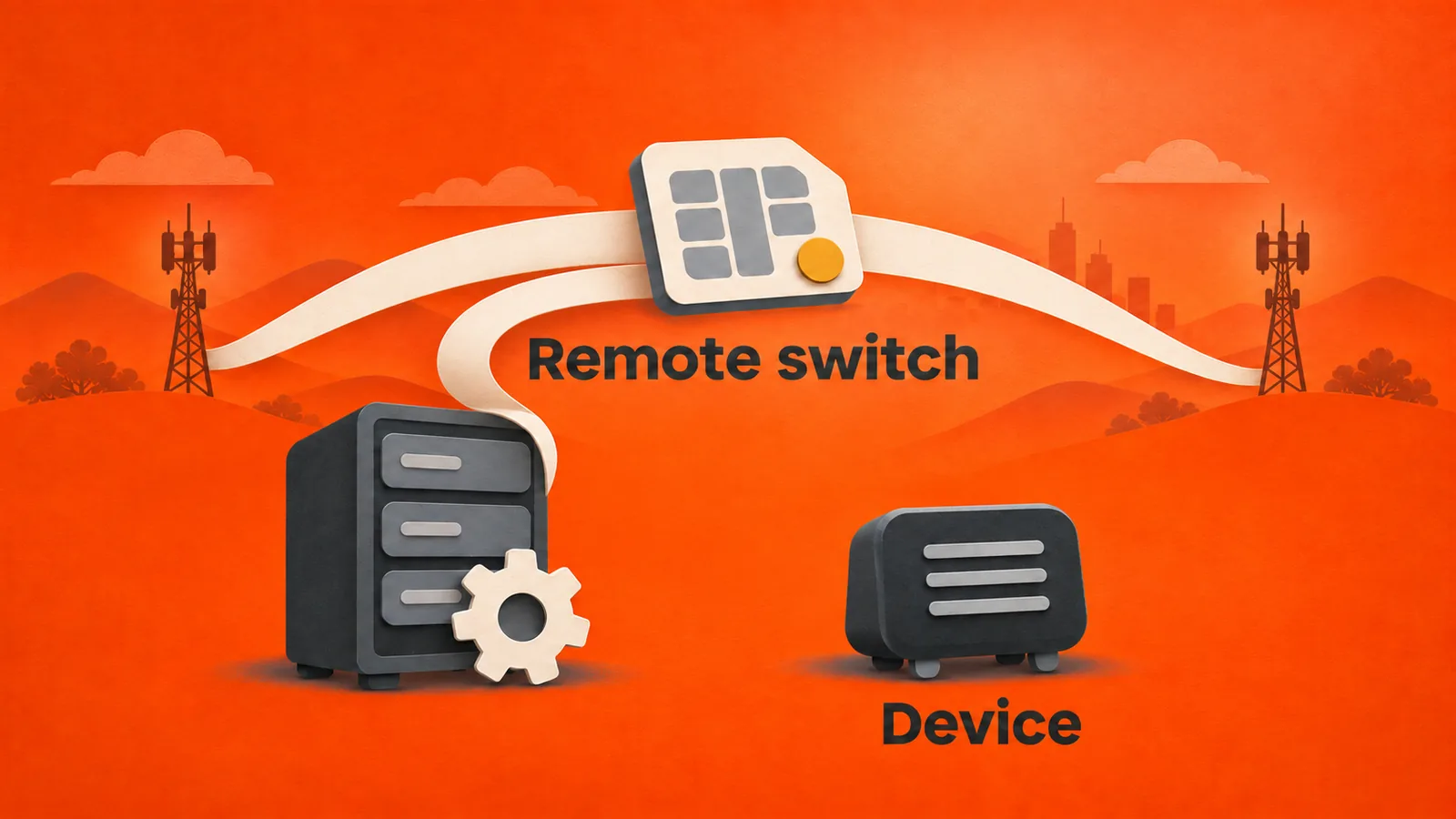
Direct and indirect profile download paths are both supported options in the architecture. That does not mean every deployment supports both. The device, IPA, eIM and profile service must implement compatible versions and interfaces, so “SGP.32 ready” is not a complete compatibility statement. Simplex Wireless, in its write-up of its own SGP.32 work, makes the same point from the implementation side: IPAe and IPAd variants, message formats and bindings differ, and modems behave differently. It is a vendor account, so read it as one provider’s experience, not a test of anyone else’s platform.
Business policy engines, billing systems and anything sold as an eSIM orchestrator sit around these mechanisms. They are not other names for the eIM. Bootstrap connectivity also needs its own design: a bootstrap profile or another supported connection has to reach the required services before any remote operation can happen. The remote SIM provisioning guide covers that first connection.
Architecture check: record module, firmware, eUICC, IPA location, eIM, profile source and specification version together. A demonstration on a different combination is context, not acceptance evidence for your device.
How do you turn connectivity policies into controlled campaigns?
A policy states which devices are eligible, which actions are permitted, what must be observed and how to recover. A campaign applies a versioned policy to a defined cohort. Cost, location or service quality can inform the decision, but an observed condition should open a controlled workflow, not trigger an unrestricted change across every device.
Start with the business outcome, because many changes need no profile change. A regional deployment may need an approved local service offer. A renewal may need a different commercial plan on the same profile. Separating plan changes from profile changes avoids needless operations and makes approval responsibility clear.
A usable policy includes the conditions for stopping, not only for starting.
| Policy element | Record before execution | Failure question |
|---|---|---|
| Eligibility | Device configuration, market and approved profile | What happens to an unsupported device? |
| Authority | Requesting role, approval and policy version | Can an unauthorized change reach the fleet? |
| Observation | Telemetry source, freshness and acceptance window | Can stale information trigger a change? |
| Recovery | Stop condition, retry limits and escalation owner | What remains possible if contact is lost? |
Source: proposed campaign worksheet, not a GSMA-mandated business policy or a measured customer process.
Limit the first cohort and widen it only after reviewing results. Keep the previous policy version, the device membership and the action history. Without them, nobody can tell a policy error from an incompatible profile or an unreachable device when a campaign stalls. Keep policy evaluation separate from execution permission too: a cheaper eligible plan may justify a review, but the approved maintenance window and service requirements should still decide whether a change proceeds.
How do you verify service and test the recovery path?
A completed download request is not proof of a working change. Operations teams should distinguish four observations: the profile was installed, the profile was enabled, the device registered and has a data path, and the application sent its expected telemetry or completed its expected transaction.
| Check | Required observation |
|---|---|
| Profile result | Download and enable status for the intended profile and device |
| Network service | Registration, data path and required service confirmed |
| Application result | Expected telemetry or transaction received after the change |
Profile, network and application observations feed one campaign record. This illustrates acceptance evidence, not a GSMA protocol architecture.
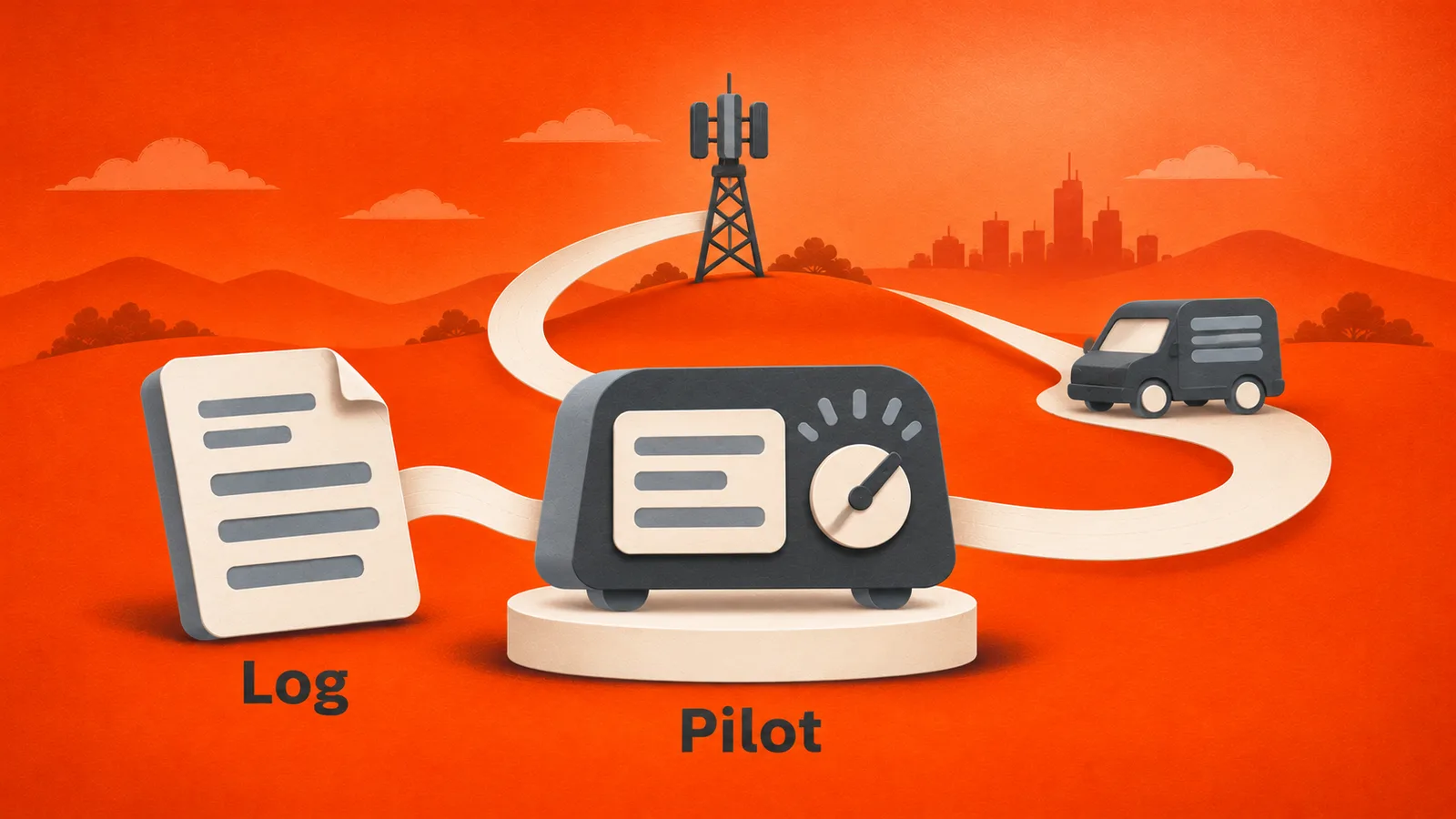
For each campaign, keep the device identifier, intended profile, request identifier, timestamps, returned operation status and application result. Correlate asynchronous events so a late response from an earlier attempt cannot close the wrong request, and check repeated requests and partial completion before allowing unattended retries.
Run a failure drill before you scale
Include at least four cases: an unreachable device, a rejected profile operation, a profile that enables but cannot deliver the required service, and a device that reconnects after the campaign window closed. For each, decide whether it should retry, pause, recover through a supported local mechanism or escalate to a person.
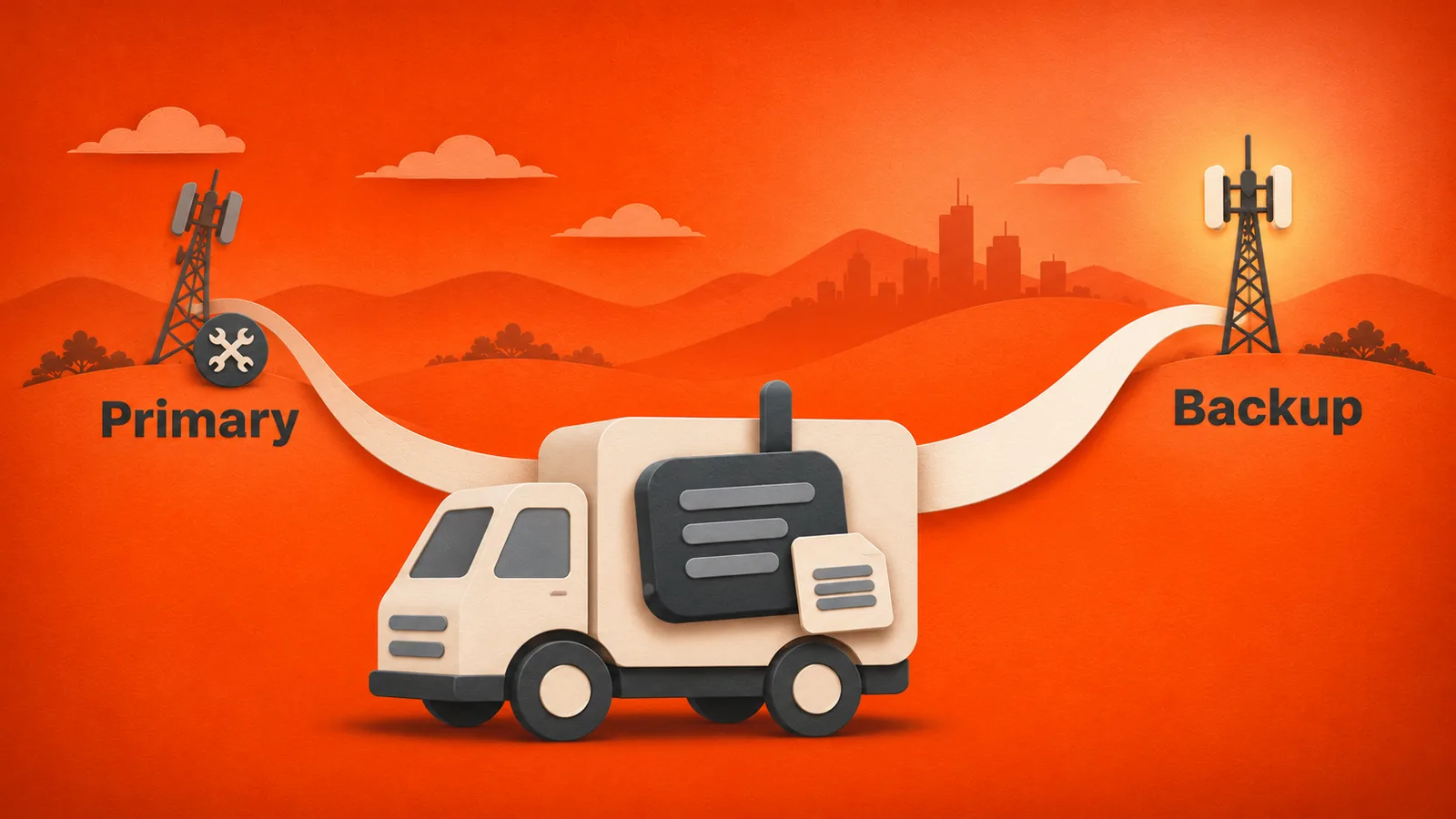
Do not assume that a second stored profile gives automatic fallback. Device and eUICC behavior, configured recovery mechanisms, authorized service and available coverage decide what can happen without a fresh remote command. A platform cannot send that command to a device with no usable communications path. Simplex Wireless names rollback to the previous profile, protection against interrupted downloads and a minimal bootstrap profile as the mechanisms it treats as essential. Whether your hardware supports them is a test, not an assumption. A profile change can also interrupt an application session, so measure recovery time on the actual design.
Failure check: keep the last known device state separate from its observed state. “Command sent” and “device recovered” need different evidence, especially when a device comes back after being offline.
Single-network fleets face this risk in an extreme form, since one outage affects every device. Our piece on the risks of a single-carrier IoT strategy covers that exposure, and the guide to multi-IMSI versus eUICC compares the technical options for switching.
Do you actually need eSIM orchestration?
Often not at first. Orchestration pays off where repeated connectivity changes or fragmented operations create a meaningful burden. A smaller, stable deployment on one carrier in one region may be well served by existing carrier controls and written manual procedures. Compare the operating burden and the failure exposure before adding a platform or an integration.
It tends to earn its place when several of these are true:
- Devices operate in more than one country or on more than one carrier.
- Devices are long-life or unattended, so nobody can visit them.
- A carrier problem on a subset of devices would cause a real business problem.
- Costs and plans must be controlled per region.
- The team cannot change devices one at a time at the fleet’s size.
Even then, the workflow follows service requirements. A mobile tracker may need to keep location reports while it crosses service areas, so coverage and recovery along the route matter, along with how the application treats gaps. A stationary agricultural sensor may care more about power draw and a maintenance schedule that fits its communication windows. Industrial monitoring may involve approved private and public network arrangements, and profile management does not supply radio support, network authorization or application routing. For healthcare or other critical uses, validate the whole service design and its fallback behavior. eSIM orchestration alone is not a continuity or safety assurance.
A common device SKU can reduce provisioning variation where radio bands, product approvals and carrier services line up. Remote profiles cannot remove those physical and commercial constraints. The IoT SIM cards guide covers the device and network requirements, and the enterprise eSIM guide explains how inventory and cost connect to business ownership. Standards also have limits: the same standard does not guarantee every carrier has implemented it, and rules on where subscriber data may be processed vary by country, so check both for your markets.
How should you evaluate a platform with a pilot?
A pilot should demonstrate supported device operations, recovery and commercial reconciliation on a defined cohort. Ask each supplier for the same things:
- Operator neutrality: which carriers and profile sources are integrated today, and which are planned.
- Standards coverage: which of SGP.22 and SGP.32 are supported, on which device combinations.
- API access: whether the same actions are available to your systems as to the console.
- Automated response: what happens on a carrier failure, shown on a test device, not described on a slide.
- Billing: one invoice or several, and how cancellation is reconciled.
- Reporting: usage, spend and operation history across carriers.
Accept the pilot only when technical and operating records agree.
| Review area | Evidence to retain | Responsible team |
|---|---|---|
| Compatibility | Versioned configuration and approved profile matrix | Product and delivery engineering |
| Campaign result | Profile, network and application results, including failures | Engineering and fleet operations |
| Operating control | Permissions, audit trail and escalation record | Platform operations |
| Commercial closure | Usage, charges, cancellation and final invoice reconciliation | Operations and finance |
Source: proposed acceptance framework. Name the tested environment in the record; a demo on other hardware is not universal compatibility.
Compare total operating cost across equivalent cohorts and observation periods. Include platform charges, connectivity, support, failed changes and field recovery. Retiring a device also means closing the carrier subscription and reconciling the final charges; disabling a profile alone does not cancel anything commercially.
What a published example shows
Butlr, which makes smart-building sensors, needed connectivity across markets including the US, UK and France. In its published case study, Spenza supplied plans matched to the sensors, centralized management and unified billing. The page reports regional launch time falling from 60 days to 7 and a more than 50% cut in financial administration overhead, which are Butlr’s results as published. They show why regional plans, device management and billing need shared ownership. They are not a protocol acceptance test, and the case does not identify a tested SGP.32 profile-switching implementation.
Spenza describes its TelecomHub as access to 180+ operators, with SIM and eSIM provisioning and routing through one API. For a multi-carrier pilot, put your own device configuration and regional requirements in front of any supplier, ours included. The related reading on single-pane-of-glass IoT management and global IoT connectivity helps frame the scope, and teams building their own service layer can see how it works in the MVNO eSIM implementation guide.
Conclusion
eSIM orchestration earns its place when it makes connectivity changes controlled, observable and recoverable. Start with the device configuration and the authorized service, identify the profile-management architecture, and write policies with explicit stop conditions. Require separate evidence for profile operations, network service and application behavior, and keep subscription and billing closure in the same process. The next step is a scoped pilot with an agreed acceptance record, widened only when the results support it.
Frequently asked questions
What is eSIM orchestration?
eSIM orchestration is the control layer that decides which connectivity change a device should get, executes it through remote SIM provisioning, verifies that service works and records the outcome. It sits above provisioning and connectivity management, and it covers eligibility, approvals, retries and exceptions across a fleet.
Is eSIM orchestration the same as remote SIM provisioning?
No. RSP provides mechanisms for remotely delivering and managing supported profiles. Orchestration coordinates authorized decisions, execution, observations and exceptions across the operating workflow. One product can contain both, so evaluate the behavior and evidence you need rather than the label.
How is eSIM orchestration different from a CMP?
A connectivity management platform mainly gives you inventory, usage and service controls. Orchestration adds coordinated, policy-driven changes with checks and recovery. A CMP may include some automation, so ask for demonstrated workflows, not category names.
Does SGP.32 automatically choose the cheapest carrier?
No. SGP.32 defines IoT profile-management mechanisms and interfaces, not a commercial optimization policy. Carrier choice depends on authorized offers, service needs, device compatibility and business rules. A platform may implement that logic, so verify its inputs, permissions, execution controls and measured results.
Can orchestration recover a device that is completely offline?
A platform cannot send a fresh remote command without a usable path to the device. Recovery may depend on behavior configured earlier on the device or eUICC, an available alternate service or physical intervention. Test the supported recovery design before deployment, including what happens when the device returns after a campaign has expired.
Does RSP aggregation remove every carrier integration?
No. Aggregation places supported integrations behind a common interface, which reduces repeated work for your applications. The platform still needs compatible profile sources and carrier processes, and commercial agreements remain necessary. Confirm supported operations, error mapping, event timing and who owns integrations outside existing coverage.
Can one platform manage SGP.22 and SGP.32 devices?
It can if it supports the required integrations. Consumer SGP.22 and IoT SGP.32 still use different architectures and device components, so require a separate compatibility and acceptance record for each device cohort. One successful flow does not validate both.
Does deleting a profile end its subscription charges?
Not necessarily. Profile state and commercial subscription state belong to different parts of the workflow. Confirm the carrier’s cancellation process, effective date and final charges, then reconcile them against your inventory. A retired device needs both a completed technical disposition and a documented commercial closure.