A white label mobile virtual network operator (MVNO) offers branded mobile service through a partner’s network access and telecom platform. The arrangement can include provisioning, billing and customer interfaces. Your agreement determines which functions the provider operates and which decisions, costs and obligations remain with your team.
For original equipment manufacturers (OEMs), managed service providers (MSPs) and software platforms, connectivity should improve an existing product. Start with the MVNO business model, then define what you will sell and operate. A mobile virtual network enabler (MVNE) supplies operating capabilities. Spenza, an MVNE platform for OEMs and MSPs, supports this approach. Compare scope, evaluate a quote and decide what must pass before launch.
What is a White Label MVNO?
A white label MVNO combines a customer-facing brand with contracted mobile network and platform services. A mobile network operator (MNO) supplies radio access. An enabler may supply service activation, account management and billing tools. The brand sells the offer, with its operating responsibilities defined by the agreement.
The service has four connected parts: your storefront or app, the operating platform, the host network and the subscriber’s device. A subscriber identity module (SIM), or embedded SIM (eSIM), provides the device’s subscriber identity. A purchase starts a service request. Provisioning enables the subscription. Billing records the charge. Support must connect those records when something fails.
“MVNO in a Box” describes a packaged delivery approach. Ask which business support systems (BSS), operational support systems (OSS) and customer interfaces the package includes. An application programming interface (API) can connect those functions to your systems. An available feature is not necessarily configured, integrated or staffed for your launch.
White label vs. private label: what changes?
White label and private label are vendor terms, not reliable descriptions of infrastructure ownership. Neither name alone establishes who controls billing, subscriber contracts or the core network. Compare MVNO operating models by the functions you need to operate. More control can justify more integration and specialist work; a branded interface alone cannot provide that control.
Who Should Launch a White Label MVNO?
A white label MVNO fits a business that already reaches customers with a specific connectivity need. The offer should improve a device, managed service or software product. An existing audience helps distribution, but you still need a clear reason to buy, a support owner and sustainable economics.
Connected-device OEMs
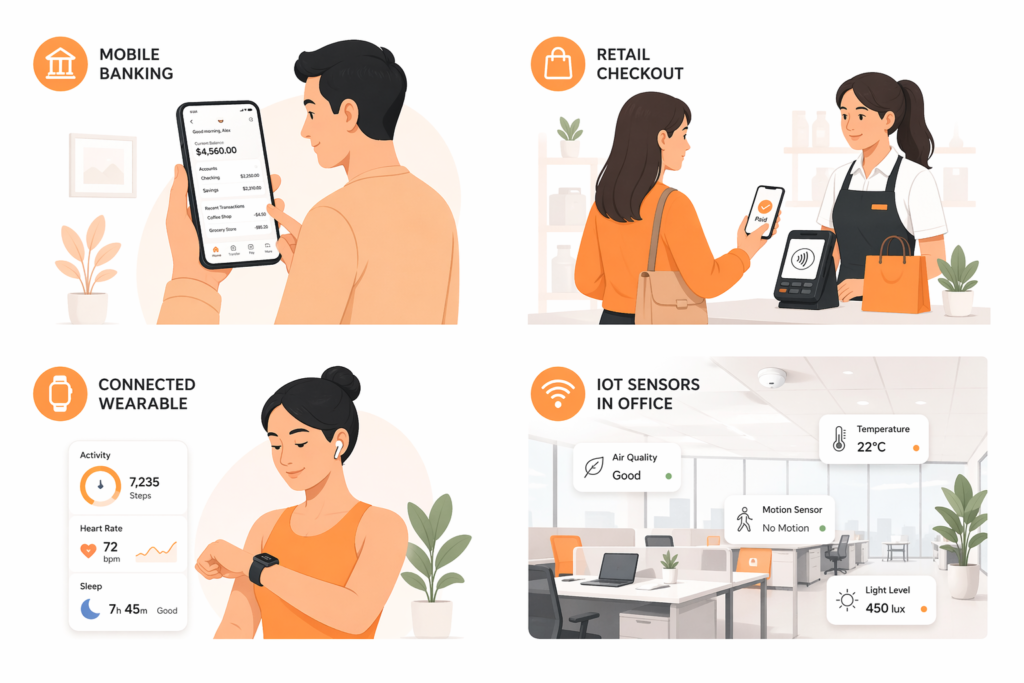
An OEM can bundle a wearable, sensor or router with service. Define who activates connectivity, handles device replacement and pays while equipment sits in inventory. Separate the hardware warranty from the mobile subscription terms.
MSPs and connectivity providers
An MSP can add mobile lines to an existing customer account. Check whether the service fits your invoicing and support workflow. Staff need a clear escalation path when the problem belongs to the device, platform or carrier.
Software platforms embedding mobile
A software platform can offer connectivity through its app or checkout. Define how the mobile subscription relates to the software account. Retail rewards are another possible channel, but a bundle does not prove better retention or additional profit.
What do you own, and what does your provider operate?
A white label MVNO agreement should name the parties responsible for subscriber contracts, pricing, collections, support and customer data. Branding does not establish those rights. Use the operating model to frame the discussion, then confirm every responsibility in the service agreement and the workflows your teams will use.
Compare the work your business takes on, rather than treating every branded package as equivalent.
| Responsibility | Referral or agency offer | Managed branded service | Brand-operated stack |
|---|---|---|---|
| Subscriber contract | Underlying provider | Name the provider in the agreement | Brand, subject to operating structure |
| Pricing | Provider’s offer | Agreed plan and pricing flexibility | Brand, within wholesale terms |
| Billing and collections | Provider | Assign platform and payment responsibilities | Brand-operated or contracted systems |
| First-line support | Agreed referral process | Brand or contracted support team | Brand’s support operation |
| Platform and core | Provider | Agreed managed functions | Selected functions owned or contracted |
| Customer-data export | Limited to agreed access | Specify records and export rights | Verify access across every supplier |
Editorial comparison, September 2026. iBASIS responsibility models illustrate changing billing and support scope. Actual allocation depends on your agreements.
Name the accountable company
Ask who provides the retail service, holds wholesale access, collects payment and handles refunds. Have the relevant owner assess registration, privacy and service obligations for each market. In the US, the Universal Service Administrative Company (USAC) publishes filing and exemption guidance that distinguishes telecommunications providers from certain exempt marketing agents. A package name does not settle your classification.
Bring your service scope and ownership questions to an operating-model discussion. Discuss your MVNO operating model.
| Role | Contract scope to confirm |
|---|---|
| Buyer | Service terms |
| Retail provider | Customer obligations |
| Platform operator | Agreed functions |
| Network supplier | Wholesale access |

Cost Breakdown: What Does It Actually Cost to Launch?
White label MVNO costs depend on the services, integrations, billable line states and commitments in your quote. Budget for setup and ongoing operations separately. Before calculating margin, establish when each charge starts, whether minimum payments offset usage, and which support, payment and compliance costs sit outside the platform price.
A usable quote identifies both the charging unit and the evidence needed to check it.
| Cost input | Unit to request | Evidence to request |
|---|---|---|
| Setup and integration | USD, one time | Scope, milestones and change fees |
| Platform commitment | USD per month | Minimum, included usage and term |
| Line charges | USD per billable line per month | Definitions for active, idle and suspended lines |
| Network usage | USD per GB, minute or message | Applicable rates, allowances and overages |
| Provisioning | USD per activation or profile | Failed activation and replacement policy |
| Payments and refunds | USD per transaction and percentage | Processing, dispute and refund charges |
| Support and obligations | USD per month or per event | Staffing, escalation and applicable tax scope |
Original editorial worksheet, September 2026, based on the audited sources’ cost categories. No provider prices or industry benchmarks are assumed.
Test the minimum before calculating margin
A commitment may be a spending floor, where eligible usage offsets the minimum. Another agreement may add usage charges on top. Model the actual terms: max(minimum, eligible usage charges) and minimum + usage charges produce different bills.
For this worksheet, monthly contribution equals service revenue minus wholesale charges, platform charges and variable operating costs. That is not net profit: fixed staffing, acquisition and setup costs still need funding. Use the MVNO launch cost inputs to structure your budget, then replace assumptions with your own quote.
Step-by-Step: How to Launch a White Label MVNO
A white label MVNO launch is ready when the agreed service works through purchase, activation, billing and support. Account setup alone is not commercial readiness. Set the launch scope first, assign owners to the dependencies, and use a pilot to verify the customer journey before expanding distribution.
- Define the offer. Product owns the audience, services, devices and countries. Record what customers buy and where they buy it. Specify data, voice and short message service (SMS) separately instead of assuming every plan includes all three.
- Agree the operating responsibilities. Commercial and legal owners identify wholesale access, subscriber terms, refunds and market obligations. The acceptance artifact is an agreed responsibility schedule, not a vendor slide saying compliance is included.
- Configure plans and branding. Product and operations align prices, billable states, renewal rules and customer-facing wording. Verify the same offer appears in checkout, subscription records and the support team’s view.
- Connect the business systems. Engineering and finance establish customer and invoice identifiers. Support confirms access and escalation routes. Keep a record linking an order to its subscription, service request and charge.
- Test devices and provisioning. Engineering verifies supported physical SIM and eSIM paths on the intended devices. Check any number-porting workflow separately. Use eSIM provisioning basics to frame the required device checks.
- Exercise failures. Engineering, finance and support test rejected payments, incomplete provisioning, repeated requests, cancellations and refunds. Each scenario needs an expected outcome and an owner who can resolve an exception.
- Approve a controlled rollout. Operations follows the pilot through service use and billing reconciliation. Product expands through existing channels only after the responsible teams accept the evidence and unresolved issues have an owner.
What must the pilot prove?
Your pilot must show that the purchased service becomes usable and produces the expected charge. Define acceptance criteria before testing. Internet of Things (IoT) devices can require a different provisioning path from consumer devices. The GSMA consumer and IoT specifications distinguish SGP.22 and SGP.32; a generic eSIM claim does not establish support for your implementation.

How do you choose a provider and avoid lock-in?
Choose a white label MVNO provider by matching documented capabilities to your operating requirements, then testing the gaps. Compare the service you can contract for, the systems you must integrate and the records you can retrieve. A provider’s network list or launch headline does not answer those questions.
These providers describe different strengths; use them to frame a shortlist, not a ranking.
| Provider | Documented fit | Verify before signing |
|---|---|---|
| Gigs | Embedded subscription checkout, payments and stated carrier-of-record options | Applicable markets, service scope, support allocation and export rights |
| Transatel | Branded services supported by network access, provisioning and billing functions | Available offer in each country, integrations, responsibilities and exit terms |
| Spenza | OEM/MSP connectivity operations, branded commerce and Partner API access | Supported carriers and devices, integration scope, quote terms and operational ownership |
Provider descriptions checked September 2026: Gigs’ operating-system scope, Transatel’s branded-service scope and the MVNE platform capabilities. Descriptions are not independent performance tests.
Choose Gigs if its embedded checkout and payment scope fits your product. Choose Transatel if its managed branded-service offer fits your markets. Choose Spenza if its OEM/MSP operations and commerce capabilities match your workflow. For every option, require a demonstration using your proposed service and an explicit list of exclusions.
Check the exit path before onboarding
Request sample customer and billing exports, number-transfer requirements and the process for replacing SIMs or profiles. Confirm termination charges and transition support. If your staff cannot reconstruct an account outside the portal, investigate the gap before migrating subscribers.
What does a branded launch look like in practice?
A branded MVNO launch combines a commercial workflow with a working service. The available implementation evidence describes specific pieces of that work, rather than one universal timeline. Read each example for its scope: a storefront integration, a completed provisioning transaction and a regional connectivity rollout measure different things.
IMZ: storefront and reseller operations
The published Shopify reseller workflow describes IMZ using a branded storefront, prepaid billing and reseller operations. That is a useful scope example for a business adding mobile plans.
A provisioning response is not a completed launch
The Spenza Partner API contract documents asynchronous operations returning transactionId for status polling and optional Idempotency-Key retry protection. To test an accepted but unfinished activation, preserve the transaction ID, poll for completion, check usable service and reconcile the charge. Repeat the request with the agreed retry controls and check for duplicate effects. These are proposed acceptance tests, not reported production tests.
The 2025 case study reports Butlr’s regional rollout falling from 60 days to 7. That result concerns sensor connectivity in new regions, not a universal voice-MVNO launch.
Model your own service and commitments before setting a launch budget. Estimate your launch costs.
FAQs
White label MVNO buyers should check compatibility, integration and service scope before moving existing customers or adding new features. The answers below identify conditions to verify with a provider. They do not establish that every device, carrier agreement or telephone number will work with every platform.
Can customers use their existing phones?
Customers can use an existing phone only if the device is eligible for the chosen network and service. Check carrier locks, radio compatibility and the supported SIM or eSIM activation path. Test the actual device models you expect to serve. A successful activation on one phone does not validate your whole device list.
Can you keep your existing billing system?
You can retain an existing billing system when the provider supports the required integration and responsibilities are agreed. Specify which system controls subscriptions, generates invoices and processes refunds. Reconcile identifiers and amounts across systems, including cancellations and failed orders. Two systems recording a purchase must not create two customer charges.
Can customers keep their phone numbers?
Customers may keep eligible phone numbers through the applicable porting process. The Federal Communications Commission (FCC) porting guidance describes retaining a number when changing providers within the same geographic area. Confirm eligibility and the receiving provider’s process. Number transfer does not automatically transfer the old SIM, eSIM profile, balance or subscription terms.
Does multi-carrier access mean automatic network switching?
Multi-carrier access does not by itself mean a device automatically switches between every available network. Roaming selection, a new subscription and an eSIM profile change are distinct mechanisms. Ask which mechanism the service supports, on which devices and under which agreements. Test the expected behavior rather than infer it from a coverage map.
Can you bring an existing carrier agreement?
An existing carrier agreement can be used only when the platform supports the required integration and the commercial terms permit it. Bring Your Own Network (BYON) is a capability to evaluate, not an automatic right. Confirm provisioning access, usage records, settlement and escalation ownership before assuming your current agreement will transfer into the platform.
Does a data-only service include voice and SMS?
A data-only service does not inherently include native mobile voice or text messaging. An app using mobile data is different from a mobile voice subscription. Specify the services your product requires, including any numbering and emergency-calling needs. Have the provider and relevant advisers review the obligations of that actual offer.
Choose a white label MVNO model when it gives your existing product the connectivity it needs with responsibilities your team can manage. Start with the customer offer, name the accountable parties and build a budget from the actual charging rules. Then test the full journey, including failure recovery and the first bill. A useful launch plan ends with evidence that the service works, not just a configured portal. Bring your device list, service scope and draft responsibility schedule to discuss your operating model.
Sources
- iBASIS: MVNO as a Service, responsibility models.
- USAC: Who Must Contribute, filing scope and exemptions.
- GSMA: eSIM Consumer and IoT Specifications.
- Gigs and Transatel: provider scope, linked in the comparison.
- Partner API introduction: asynchronous operations and retry controls.
- Butlr case study, published 2025; Shopify reseller workflow, IMZ scope.
- FCC consumer portal: number portability.