For most of my career, telecom has been treated as a specialist industry.
You needed carrier relationships. You needed provisioning systems. You needed billing logic. You needed SIM operations, compliance workflows, support processes, reconciliation, and a vocabulary full of acronyms that could make even experienced product teams hesitate.
I have seen this from multiple sides: telecom infrastructure, OSS/BSS, roaming, eSIM, enterprise products, fintech, and now as the founder of Spenza.
And after more than two decades in this ecosystem, I believe we are entering one of the most important shifts in telecom:
“The next generation of MVNOs will not look like MVNOs.“
They will look like connected-device brands, family-safety apps, employee-benefit platforms, MSPs, IoT companies, travel platforms, AI-agent companies, and vertical SaaS businesses.
In many cases, they may never even call themselves MVNOs.
They will simply ask a more practical question:
“Can connectivity become part of our product?”
Connectivity is becoming embedded
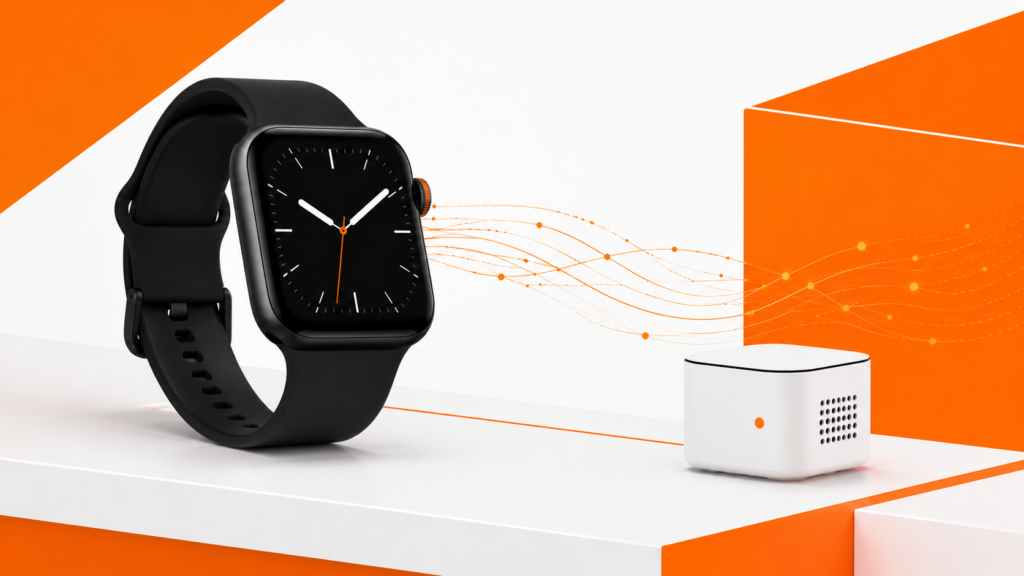
A smartwatch company doesn’t wake up wanting to run a telecom network. It wants the watch to work out of the box.
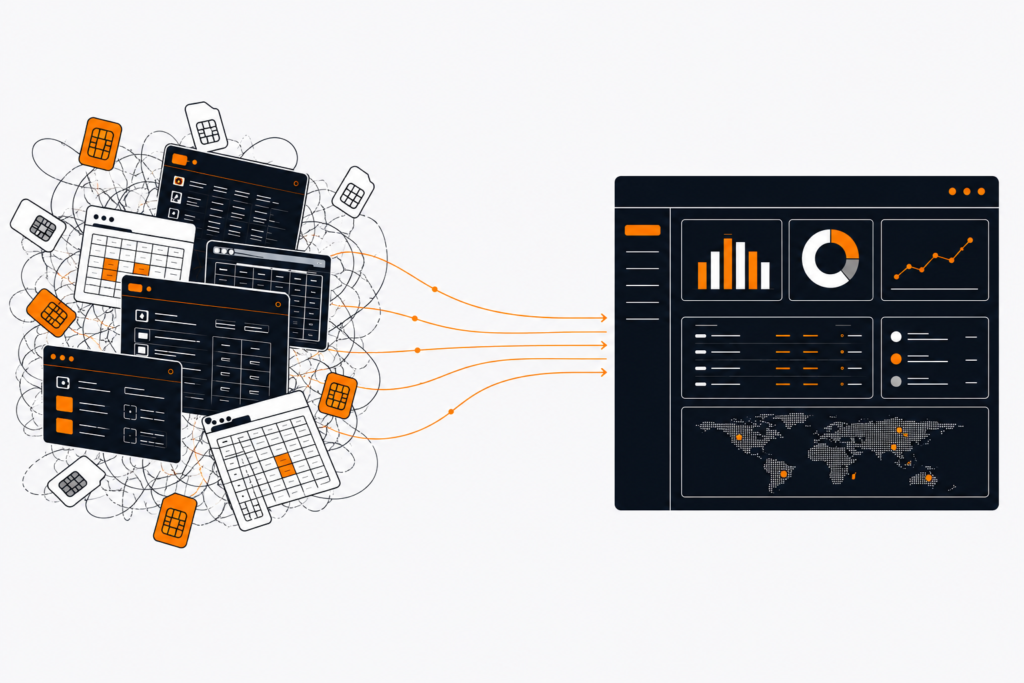
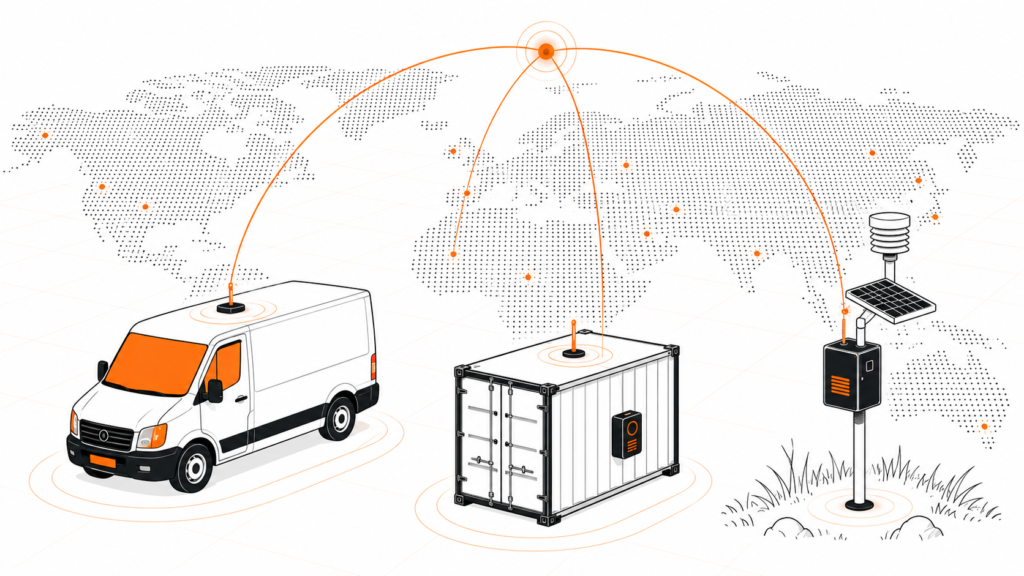
A fleet company doesn’t want to manage SIMs across spreadsheets and carrier portals. It wants its vehicles and sensors to stay connected.
A benefits company doesn’t want to build telecom billing. It wants to offer mobile plans as a differentiator.
An AI-agent company doesn’t want to become a voice carrier. It wants trusted phone numbers, programmable communications, and usage it can actually see.
That’s the shift. Telecom is moving from a standalone service sold by operators to a capability embedded inside products and workflows.
The old model: Buy telecommunications service from a carrier as a standalone utility.
The new model: Build a product where connectivity is embedded in the overall customer experience, creating value through integrated services, software, devices, and seamless connectivity rather than treating mobile service as a separate purchase.
That sounds simple. But behind the scenes, it is not simple at all.
The hidden complexity behind “just add connectivity”
The moment a company decides to add mobile, the hard part shows up fast:
Which operator, or operators?
SIM, eSIM, or both?
How are plans priced, and who owns the customer?
What happens when usage crosses a limit and who eats the overage?
Can the business run multiple billing cycles? Can the end customer self-serve?
Can support see SIM status, usage, invoices, and provisioning events in one place?
Can finance reconcile carrier invoices against customer billing?
And can you launch in one country now, then add more later?
These are not edge cases. These are the operating system of a telecom-enabled business.
This is why many promising mobile-service ideas die before they launch. Not because the customer demand is weak, but because the operational burden is too high.
The telecom stack was not designed for every product company to become a connectivity company.
But that is exactly where the market is going.
One fleet customer came to us convinced that connectivity would be the hardest part of the project. It wasn’t. Device provisioning was relatively straightforward. The real bottleneck was reconciling billing across multiple countries, matching operator invoices to customer subscriptions, and repeating that process accurately every month. What initially looked like a telecom challenge turned out to be an operations challenge, which is often the case as deployments scale.
eSIM and SGP.32 will accelerate this shift
eSIM made connectivity more programmable for consumer devices.
SGP.32 takes this further for IoT and constrained devices.
This matters because IoT devices are not phones. They may not have screens. They may not have users nearby. They may sit in the field for years. They may move across geographies. They may need remote profile management, operator flexibility, and lifecycle control without physical access.
That changes the business model.
When connectivity profiles can be managed more intelligently, companies can think differently about manufacturing, deployment, failover, roaming, cost optimization, and global expansion.
But eSIM standards alone do not solve the business problem.
A standard creates possibility. A platform turns it into an operating model.
To make eSIM and SGP.32 useful at scale, companies still need orchestration, billing, analytics, policy controls, support tooling, plan management, customer experience, and integration into their existing systems.
That is where the next wave of telecom infrastructure will be built.
AI will change telecom operations before it changes telecom marketing
Most AI conversations in telecom start with chatbots. I think that’s too narrow. The real opportunity is operational AI.
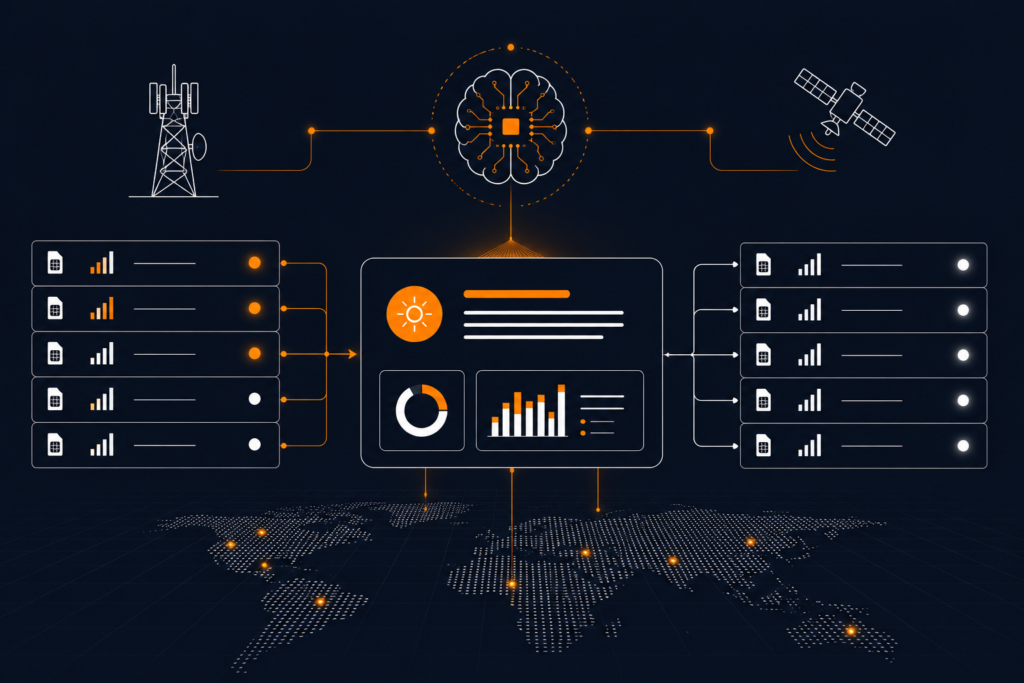
Telecom is full of repetitive, high-consequence work: plan selection, provisioning failures, usage alerts, invoice reconciliation, margin leakage, roaming anomalies, number lifecycle, support triage, fraud signals. That’s where AI helps immediately, not as a generic bot, but as a telecom-aware operating layer.
Picture a system that flags abnormal usage before bill shock hits. Recommends the right plan before margin leaks. Explains why an activation failed. Reconciles operator invoices against customer subscriptions. Finds inactive SIMs that are still billing. Sends a fleet owner a one-paragraph health summary every morning.
The future MVNE won’t just hand you tools. It will increasingly hand you agents that help run the operation.
This is bigger than MVNO enablement
For years, MVNEs were defined by their relationship to MVNOs. That definition is now too small. The real category is embedded telecom.
Any business with customer ownership, distribution, and a real use case should be able to launch connectivity without becoming telecom-heavy:
- Device OEMs
- IoT businesses
- MSPs and resellers
- Travel eSIM brands
- Employee-benefit platforms
- Security and family-safety apps
- AI-agent companies
- Enterprise mobility teams
- Vertical SaaS platforms
These companies do not want telecom complexity.
They want customer value, recurring revenue, better retention, and differentiated product experiences.
Connectivity is becoming one more layer in the modern software stack — like payments, messaging, identity, cloud, or logistics.
Nobody says, “I want to become a payment processor.“
They say, “I want payments embedded in my product.“
Telecom is moving the same way.
Why traditional operators should care
One question naturally follows all of this:
If connectivity becomes invisible, where does that leave traditional operators?
In my view, this shift doesn’t make operators less important. It makes their role more foundational.
As connectivity becomes embedded inside software, devices, and enterprise platforms, operators have an opportunity to become the infrastructure behind thousands of new products instead of selling only through traditional retail channels. The winners will be the operators that expose their networks through APIs, simplify wholesale, and make it easy for businesses to build on top of them.
In the embedded telecom era, the best network won’t just be the one with the widest coverage. It will be the one that’s easiest for developers, partners, and businesses to integrate into their products. That’s a much bigger opportunity than the traditional MVNO model ever offered.
Four predictions for the next five years
Enough about what’s changing. Here’s where I think it lands.
1. Connectivity becomes a default, not an add-on.
A meaningful share of connected devices will ship already online. The SIM slot disappears, the setup screen disappears, and “activate your device” becomes a step the customer never sees. OEMs that still treat connectivity as an accessory will lose to the ones that treat it as table stakes.
2. AI agents will provision and manage their own numbers.
Software agents are about to become first-class telecom customers. They’ll request phone numbers, send and receive messages, respect policy limits, and retire numbers when a task is done, no human in the loop. Whoever exposes this as clean, governable APIs will quietly power a huge amount of machine-to-human communication.
3. Every SaaS platform with field workers will become a connectivity business.
If your software already runs the day for technicians, drivers, nurses, or inspectors, connectivity is the most natural next line item you have. Field-first SaaS won’t just integrate telecom. It’ll bundle it, resell it, and book the margin. Connectivity moves from a cost center to a revenue line.
4. Customers won’t buy mobile plans. They’ll buy connected products.
The next generation of customers won’t choose a carrier before buying a product. They’ll choose a watch, a vehicle, a fleet platform, or an AI service that simply works from day one. Connectivity will become an invisible part of the experience rather than a separate purchase. The companies that own the customer relationship will increasingly decide how connectivity is delivered.
None of these require a company to think of itself as a telecom operator. That’s the whole point.
Why we’re building Spenza
Control without the carrier baggage
Our view at Spenza is simple: every business should be able to launch and manage mobile connectivity without rebuilding telecom from scratch.
That requires an operator-neutral platform.
It requires APIs, SaaS workflows, billing, eSIM orchestration, customer experience, support tooling, and automation, that gives businesses control without forcing them to inherit the full weight of becoming a carrier.
This is the problem we are building Spenza for.
Building Spenza has reinforced this belief: companies don’t need another telecom stack. They need telecom capabilities that fit naturally into the software they already run.
So the goal isn’t “launch an MVNO faster.” It’s to make connectivity programmable, monetizable, and manageable for any business that wants mobile inside its product.
The next MVNO might be a watch company. An IoT fleet. An AI agent. A benefits platform. A device brand that just wants the product to work the second a customer opens the box.
When that happens, the winners won’t be the companies that build the best telecom products.
They’ll be the ones that make telecom disappear.
That is the future I am excited about.
The next MVNO will not look like an MVNO.
It will look like a great product with connectivity built in.
Ready to embed connectivity into your product? Book a demo and see how Spenza makes it possible.