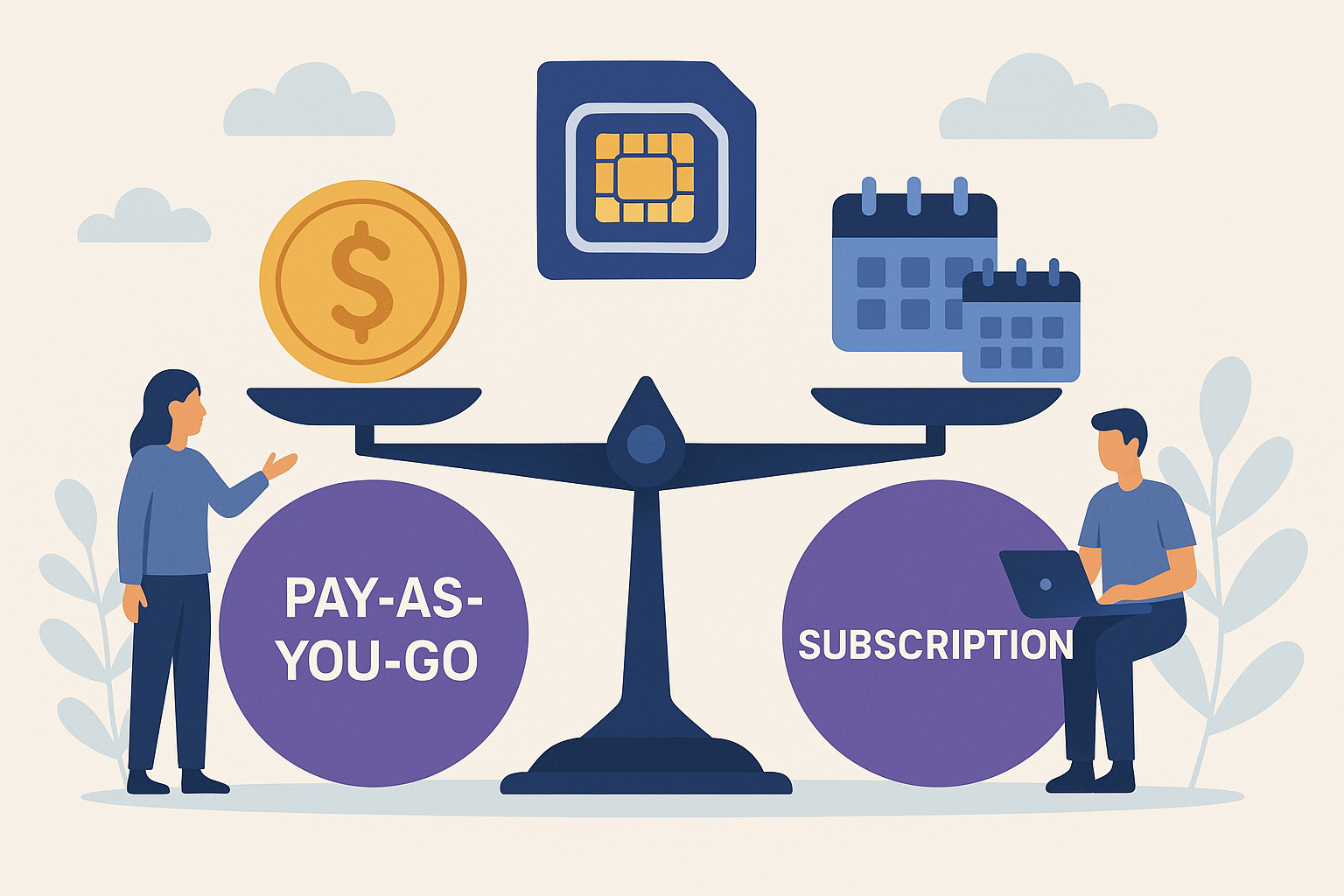
The Internet of Things (IoT) is growing fast, and businesses need affordable ways to keep their devices online. Choosing the right IoT eSIM pricing models is a major decision. Two common options dominate the market: Pay-as-You-Go and Subscription Plans. Each has pros and cons, but the wrong choice could lead to unexpected costs or limited flexibility. This guide breaks down how these pricing models work, when to use them, and how businesses can save money on IoT connectivity.
By the end, you’ll know:
- What Pay-as-You-Go and Subscription Plans are.
- How these IoT eSIM pricing models work.
- Key differences between Pay-as-You-Go vs. Subscription.
- Which pricing model best suits your IoT needs.
- How Spenza helps businesses reduce IoT connectivity costs.
How Much Does an IoT Connectivity Cost?
IoT eSIM Pricing Definition
IoT eSIM pricing refers to the way businesses are charged for cellular connectivity delivered through embedded SIMs in connected devices. Common pricing models include Pay-as-You-Go (PAYG), subscription plans, and hybrid models that combine predictable recurring charges with usage-based billing.
Pricing for IoT connectivity depends on network coverage, data usage, and device type. A smart meter that sends small data packets will cost much less than a connected vehicle streaming live data.
Factors That Impact IoT Connectivity Costs
- Network Type – Local vs. global coverage, roaming fees, and data speed.
- Data Consumption – High-bandwidth applications (video, AI) cost more than low-bandwidth ones (sensors, smart meters).
- Industry Needs – Logistics, healthcare, and automotive have different data requirements.
IoT Data Plan Pricing Trends in 2026
IoT connectivity costs are shifting. The United States led the world in 2024 with 72 million eSIM-based IoT connections. This demand is pushing providers to offer more flexible IoT eSIM plans with customized pricing. For example, travel eSIM users in 2024 paid $5.50 per GB abroad with IoT eSIMs, much lower than the $8.57 per GB with traditional roaming. Businesses must compare IoT SIM subscription vs. pay-as-you-go to find the best fit.
What is Pay-as-You-Go IoT eSIM Cost?
Pay-as-You-Go (PAYG) IoT eSIM pricing charges businesses according to the connectivity or data they actually use rather than requiring a fixed recurring data allowance. It can be suitable for low, unpredictable, seasonal, or pilot-stage IoT deployments where usage varies over time.
How PAYG Works
- Businesses buy data in small chunks.
- No long-term contracts or commitments.
- More cost-effective when data use is unpredictable.
Advantages of PAYG
- High flexibility – Only pay for what is used.
- Great for testing – Ideal for pilot projects and small deployments.
- Works well for seasonal businesses – No need to pay when devices are inactive.
Challenges of PAYG
- Costs add up fast – High usage can become expensive.
- Difficult to predict expenses – Monthly bills vary.
- No bulk data discounts – Subscription models often offer lower per-MB rates.
Spenza enables bulk SIM updates and real-time usage tracking. Businesses can adjust plans on demand without switching providers.
What is Subscription IoT eSIM Pricing?
Subscription-based IoT eSIM pricing charges a recurring monthly or annual fee for a defined connectivity allowance or plan. It is generally better suited to deployments with predictable usage, where businesses value budgeting consistency and potentially lower unit costs at scale.
How Subscription Plans Work
- Companies prepay for a set amount of data.
- Some providers offer rollover data or shared pools.
- Best suited for businesses with steady data usage.
Advantages of Subscription Plans
- Predictable costs – Easier budgeting for businesses.
- Discounted bulk data – Lower rates per MB.
- Better for large-scale IoT networks – No risk of sudden high bills.
Disadvantages of Subscription Plans
- Not ideal for fluctuating usage – Businesses may overpay for unused data.
- Contracts may limit flexibility – It is harder to switch plans mid-term.
Spenza provides a consolidated dashboard for managing subscriptions across different operators. Businesses can add, remove, or modify subscriptions in bulk.
Comparing IoT SIM Subscription vs. Pay-as-You-Go
Both Pay-as-You-Go and Subscription Plans have strengths. But which one is better for your business?
| Factor | Pay-as-You-Go | Subscription |
|---|---|---|
| Cost | Flexible, but expensive for high usage | Fixed, lower per-MB rates |
| Scalability | Good for small deployments | Best for large IoT networks |
| Use Cases | Startups, testing, seasonal usage | Enterprise IoT, stable usage |
| Flexibility | No contracts, change anytime | Locked into a plan |
Spenza allows businesses to switch between PAYG and subscription plans easily. No need to change providers or replace SIMs.
Best IoT eSIM Pricing Strategy for Businesses
Choosing the best IoT eSIM pricing strategy depends on usage, budget, and scalability. Are you paying more for IoT connectivity than you should?
Which IoT eSIM Pricing Model Should a Business Choose?
Businesses with low, unpredictable, seasonal, or pilot-stage data usage may benefit from Pay-as-You-Go pricing. Businesses with predictable and consistent usage may prefer subscription plans for easier budgeting and potentially lower unit costs. Hybrid pricing can suit deployments that need a predictable base allowance while accommodating occasional usage spikes.
IoT eSIM pricing can feel like a guessing game. Many businesses pay for data they don’t use or end up with surprise costs. Others lock into long-term plans that don’t match their needs. The wrong pricing model can drain budgets fast. So, how do you decide the best IoT eSIM pricing models for your business? The answer depends on three things: usage, budget, and scalability. Let’s break them down.
How Much Data Will Devices Use?
Data usage is the first thing to consider. Some IoT devices send tiny data packets, while others stream real-time updates. If you know how much data your devices need, picking the right plan becomes easier.
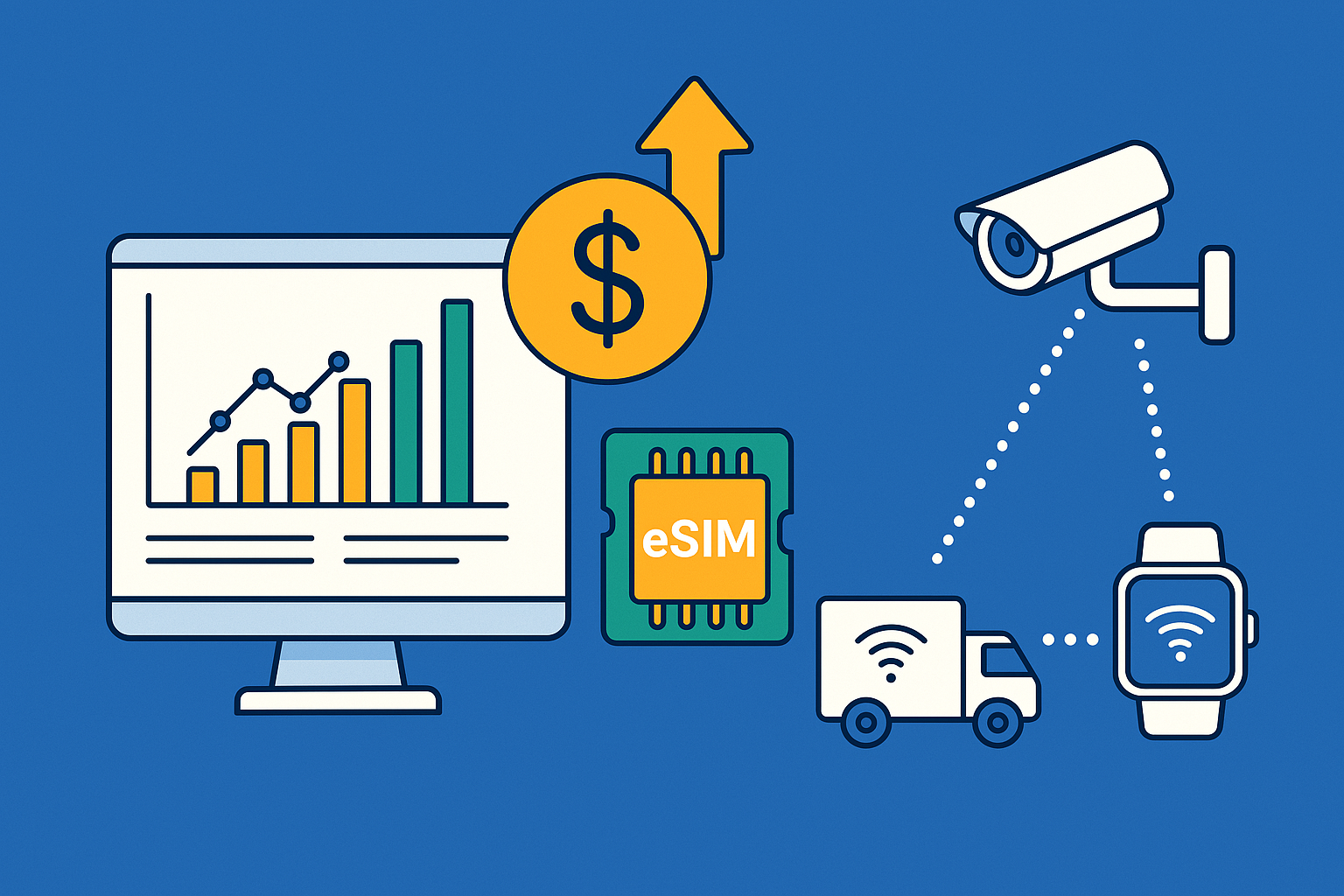
- Low Data Devices (e.g., smart meters, asset trackers) – These devices send small bits of data. They don’t need a fixed plan. Pay-as-You-Go (PAYG) often works better.
- High Data Devices (e.g., video surveillance, connected vehicles) – These use more bandwidth. A subscription plan is usually the better choice.
But here’s the catch: not all IoT devices use the same data every month. Some might stay idle, while others might need more data for software updates. That’s why the next question is important.
Will Data Usage Change Over Time?
IoT data needs can shift. Some months, usage is low. Other months, it spikes. If your data use isn’t steady, a subscription plan might not be the best option.
- Predictable Usage? A subscription plan makes sense.
- Fluctuating Usage? PAYG is better.
Think about seasonal businesses. A retailer using IoT sensors for holiday sales may need more data in November and December but far less in other months. A PAYG model would prevent overpaying for unused data.
How Fast Will the Business Scale?
If your company is expanding fast, your IoT needs will change. A pricing model that worked for 1,000 devices may not work for 10,000.
- Growing Slowly? A PAYG plan might work better.
- Scaling Quickly? A subscription model locks in lower rates as you add more devices.
A smart city project, for example, may start with a few sensors but grow to thousands over time. Switching plans later can be a headache. The best move? Think ahead and choose a plan that scales with your business.
Hybrid Models: The Best of Both Worlds
Many IoT providers now offer hybrid plans. These combine the flexibility of PAYG with the stability of a subscription model. Here’s how it works:
- Set a base subscription for regular usage.
- Use PAYG for unexpected spikes.
This way, businesses get predictable pricing while staying flexible.
Which Pricing Model Works Best for Your Industry?
Different industries need different plans. Let’s compare.
| Industry | Best Model | Why? |
|---|---|---|
| Retail & POS | PAYG | Sales fluctuate. PAYG prevents overpaying. |
| Logistics & Tracking | Hybrid | Predictable base usage but occasional spikes. |
| Healthcare IoT | Subscription | Devices need constant connectivity. |
| Smart Cities | Subscription | Large-scale deployments with steady usage. |
| Automotive IoT | Hybrid | Some devices need more data at times. |
| Security & Surveillance | Subscription | High data use for video feeds. |
How IoT Data Costs Are Changing
- More businesses want flexible IoT eSIM plans that adapt to their needs.
- AI-driven pricing models are helping companies cut unnecessary data costs.
- Global IoT data costs are dropping as competition increases.
Future of IoT eSIM Pricing & Market Trends
- More flexible IoT eSIM plans – Businesses demand usage-based pricing.
- AI-powered pricing optimization – Data-driven cost control is growing.
- eSIM adoption is increasing – More industries are switching to embedded SIMs.
Spenza helps businesses stay ahead of pricing trends by offering custom pricing models based on real-time usage data.
How Angel Watch Reduced Costs and Won Over Parents with Smarter eSIM Plans
Angel Watch, known for its safety-first smartwatches for kids, hit a wall. Traditional carriers only offered high-cost, unlimited data plans—overkill for devices that barely needed a gigabyte. The mismatch between usage and cost was squeezing their margins. That’s where Spenza stepped in.
Using Spenza’s flexible pricing engine, Angel Watch built custom, pay-as-you-go data plans tailored to real-world usage. These plans rolled out in both the US and UK—designed specifically for low-data, always-on devices like theirs.
Instead of making parents hunt for a SIM card, Angel Watch bundled the data right into the product. Each smartwatch arrived pre-connected and ready to go out of the box. Parents appreciated the plug-and-play simplicity. Angel Watch gained happier customers, streamlined operations, and lowered their connectivity costs—all while scaling up in two major markets.
Spenza’s usage-based model wasn’t just a cost fix—it was a growth tool.
Final Thoughts
Choosing between Pay-as-You-Go and Subscription Plans depends on data usage, business goals, and cost considerations. The right IoT eSIM pricing models help businesses scale efficiently and reduce costs.
FAQs
Want expert guidance on IoT pricing? Talk to Spenza today and optimize your IoT connectivity.