eSIM for IoT is most useful when changing a cellular subscription would otherwise require someone to reach the device. A sealed sensor, remote industrial gateway or distributed tracker may remain in service through several network and commercial changes. Remote profile management gives the product team another way to respond.
The design still needs more than an eSIM component. Hardware compatibility, provisioning software, initial connectivity, carrier permissions and recovery all affect whether the device can complete its job. This guide builds on the eSIM overview for OEM engineers, product teams and connectivity buyers. It explains the architecture, maps industry needs to deployment checks and defines what to verify before extending a pilot across a fleet.
What is eSIM for IoT?
eSIM for IoT enables supported operator profiles to be downloaded and managed on an eUICC without replacing the SIM hardware for each service change. The capability suits remote or long-lived devices, but deployment still depends on compatible components, available connectivity, authorized profiles and a tested process for recovering from failures.
The terms describe different parts of the design. An operator profile contains subscription credentials and associated configuration. The eUICC securely stores and manages profiles. The physical packaging may be removable, embedded or integrated into a broader implementation. Packaging alone does not establish which remote provisioning functions the product supports.
A soldered SIM is therefore not sufficient evidence of a remotely manageable eSIM implementation. Ask for the supported specification, software version and profile-management path. Also distinguish a profile change from a plan change: an operator may alter a commercial allowance without replacing the profile stored on the device.
Match the provisioning architecture to the device
IoT eSIM architecture must identify the component that prepares profiles, the component that performs local profile operations and the manager that coordinates authorized changes. SGP.22 consumer provisioning and SGP.32 IoT provisioning use different arrangements. Choose the supported architecture from the endpoint and service implementation, then verify how its components work together.
GSMA SGP.22 defines consumer remote SIM provisioning, including the Local Profile Assistant. GSMA SGP.32 defines IoT provisioning with an IoT Profile Assistant, or IPA, and an eSIM IoT Remote Manager, or eIM. These are separate specifications, not interchangeable names for remote activation.
For SGP.32, use component responsibilities to establish integration ownership.
| Component | Responsibility | Question for the supplier |
|---|---|---|
| SM-DP+ | Prepares and delivers operator profiles | Which profile sources and delivery paths are supported? |
| IPA | Performs local provisioning functions and communicates with management infrastructure | Is the IPA in the device, IPAd, or eUICC, IPAe? |
| eUICC | Securely stores profiles and performs supported profile operations | Which hardware and software configuration has been tested? |
| eIM | Coordinates authorized IoT profile operations | How are permissions, results and failures recorded? |
Source: GSMA SGP.32 v1.2, component and architecture definitions. This table is a responsibility summary, not a protocol sequence.

Monogoto’s component documentation also distinguishes IPAe and IPAd. Existing fleets can use other architectures, including legacy M2M provisioning; an SGP.32 management service does not automatically convert those endpoints. Read the standards comparison and review the intended device design with Spenza’s connected-device team.
Translate industry use cases into device requirements
IoT eSIM use cases differ in physical access, power availability, movement and the consequences of a missed connection. Remote profile management can reduce the need for SIM replacement, but each product still needs an appropriate network and recovery design. Industry labels alone do not establish latency, availability or coverage requirements.
Start with the device’s job and failure conditions, then decide whether remote profile management addresses a real constraint.
| Use case | Why remote profiles matter | Requirement to test |
|---|---|---|
| Asset tracking and logistics | Devices move between service regions | Route coverage, allowed roaming and application recovery after a change |
| Industrial sensors and utilities | Physical access can be difficult or costly | Power budget, reachable maintenance windows and remote recovery |
| Connected buildings and cities | Equipment is distributed across sites | Site coverage, ownership records and long-term service support |
| Wearables and monitoring equipment | Compact devices need a supported onboarding process | Required services, user assistance and product-specific assurance |
| Connected vehicles and machinery | Products may outlast an initial network agreement | Module support, permitted service changes and safe maintenance conditions |
Source: editorial use-case analysis based on the merged source material. These are deployment considerations, not named customer results or service guarantees.
A battery-powered field sensor and a mains-powered gateway should not share an untested provisioning schedule. A profile operation may require more connectivity and processing than a routine telemetry message. Measure the intended behavior on the actual device, including its sleep and wake cycle.
For sensitive or safety-related applications, the product’s assurance requirements remain separate from its SIM choice. Protected subscription credentials do not prove that application data handling, operational response or the complete product meets its required obligations. Define those responsibilities with the relevant product specialists.
Verify compatibility and the first connection before shipping
IoT eSIM readiness requires a tested combination of eUICC, module, firmware, provisioning software and operator profile. The device also needs a usable path to reach the required provisioning infrastructure. A product labeled eSIM capable is not enough evidence that a particular fleet workflow or target-market service will work.
Record the exact part numbers and software versions used in the pilot. Include the radio technology, supported bands, intended countries, power constraints and required application traffic. Keep the result tied to that configuration so a later module or firmware substitution triggers a deliberate review.
Kigen’s implementation guidance highlights that products following SGP.32 can differ in IPA placement, transport support, indirect download and lifecycle integration. A standards claim is a starting point for evaluation. Test the interfaces and operating conditions that your deployment actually needs.
The first connection may come from a bootstrap profile or another supported network path. Specify where it works, which servers it can reach, what happens when its allowance or validity is exhausted and who is responsible for keeping it available. Do not assume an operational profile can be downloaded before the device has any usable connectivity.
- Confirm the intended profile is available and authorized for the device.
- Verify server reachability from the actual deployment network.
- Test installation and service activation on representative hardware.
- Include a device that loses connectivity during a supported operation.
- Record the approved recovery path and the evidence of its result.
Use the remote SIM provisioning guide for the wider delivery sequence. For commercial evaluation, ask prospective IoT eSIM providers to demonstrate the exact configuration instead of substituting a convenient test handset.
Treat profile changes as controlled lifecycle operations
IoT eSIM profile changes should be authorized, observable and recoverable within the supported implementation. Downloading a profile, enabling it, registering on a network and delivering application data are separate outcomes. Remote management reduces physical handling, but it does not guarantee a change without interruption or an automatic move to the strongest signal.
Network selection and profile selection are different mechanisms. A roaming agreement may allow one profile to use several visited networks. Replacing the operator profile changes subscription credentials and can affect routing, addressing, service features and billing. Neither mechanism should be described as universal best-network switching.
Define the desired state before sending an operation. Identify the target device and profile, confirm permission, record the request and wait for the appropriate result. If a response is delayed, check the current state before repeating a potentially disruptive action. A timeout does not necessarily mean that nothing happened.
| Stage | Check |
|---|---|
| Readiness | Exact hardware, firmware and service fit |
| Provisioning | Profile installed and application connected |
| Recovery | Failure detected and supported recovery tested |

Keep recovery conditional on the actual design. Some deployments may retain a usable previous or bootstrap profile; others need a different supported recovery route. Test that route before removing the last known working option. Do not describe rollback as a guaranteed feature of every device and service combination.
At fleet scale, start with an approved cohort and inspect outcomes before extending the operation. Define when to pause expansion, who investigates exceptions and what evidence permits the next group. Those are operating decisions to agree in advance, not timing benchmarks to invent.
Manage security, device health and cost beyond activation
IoT eSIM operations must connect profile state with device health, application behavior and commercial records throughout the product lifecycle. Secure profile provisioning protects an important part of the system, but fleet teams still need access controls, supported software, monitoring and a process for retiring devices and their billable subscriptions.
Limit who can request profile changes and preserve an audit record of the action, target and result. Protect activation information and administrative credentials. Separate a product’s device-management update from a SIM profile operation, even when the same team coordinates both.
Monitor signals that help locate a problem: device reachability, relevant health telemetry, profile status, network registration, application delivery and usage. A battery or firmware failure is not necessarily a carrier problem. A working radio connection is not necessarily evidence that the business application is functioning.
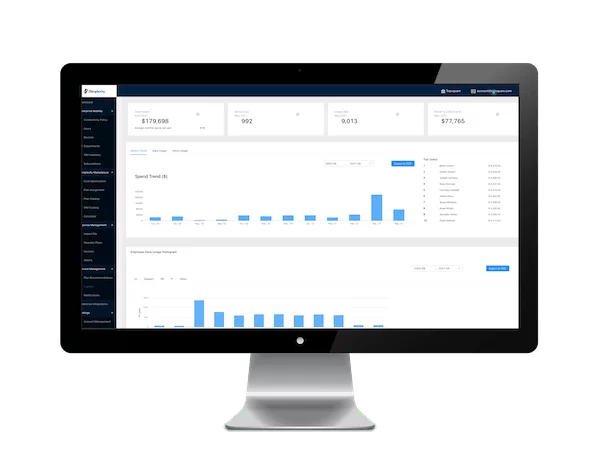
Connect each line to an asset, service owner and cost record. Review dormant subscriptions, unexpected usage, duplicated orders and unresolved credits. At retirement, confirm the intended device and profile actions separately from commercial cancellation and the final invoice. Profile deletion alone should not close the financial record.
Mixed estates also need a boundary between product fleets and employee mobility. The enterprise eSIM management guide explains enrollment, privacy, number ownership and financial controls for that wider business context.
Use customer evidence within a defined pilot
IoT eSIM deployment evidence should show the relevant devices, operating regions and management outcomes without extending a customer story beyond its published scope. Butlr provides an approved example of regional sensor connectivity and centralized administration. The case supports those operating needs, while specific provisioning architecture and recovery behavior still require device-level validation.
The published Butlr case study describes connectivity across the United States, United Kingdom and France, tailored service plans, central management and unified billing. These details demonstrate why service selection and ongoing administration belong in the same rollout plan. The case does not identify an SGP.32 version or provide a profile-change trace.
Bring the device configuration and target markets to Spenza, then agree on the records the pilot must produce.
Accept the pilot against observed outcomes, not the number of commands submitted.
| Decision | Evidence to retain |
|---|---|
| Can the device start? | Initial connectivity, authorized profile and confirmed application exchange |
| Can operations recover it? | Observed failure, identified state and successful supported recovery |
| Can the business manage it? | Asset, profile, subscription, usage and billing records that reconcile |
Source: proposed pilot acceptance framework. No unpublished customer test result is asserted.
eSIM gives IoT teams a way to manage supported subscriptions after devices leave the factory. The value depends on the full design: compatible hardware and software, a reachable provisioning path, authorized service and an operating process that can explain failures. Start with those requirements, test representative devices and preserve the evidence needed for support and finance. Expand only after the intended lifecycle works in the conditions the product will encounter. Review your IoT deployment architecture with Spenza to connect the device plan with regional service and ongoing operations.
eSIM for IoT FAQs
IoT eSIM questions often mix hardware packaging, remote provisioning and the commercial mobile service. The answers below separate those layers so product teams can ask suppliers for relevant evidence. Confirm the actual device configuration and operating agreement before assuming that a capability demonstrated elsewhere applies to a production fleet.
Are eSIM and eUICC the same thing?
The terms are related but describe different aspects of the solution. The eUICC securely stores and manages operator profiles; eSIM commonly describes the broader remote provisioning capability and implementation. Check the supported specification and software functions rather than relying on the label or the physical shape of the component.
Does eSIM automatically choose the strongest network?
eSIM provides supported profile-management capabilities, not a universal network-selection policy. Actual selection depends on the modem, profiles, operator agreements and configured service. A roaming change and an operator-profile change are different operations. Ask the provider to demonstrate the intended behavior under the coverage conditions your devices will encounter.
Can an existing IoT device be upgraded to SGP.32?
An upgrade depends on the existing eUICC, module, firmware and supported integration path. Some configurations may have a viable migration route; others require hardware or service changes. Request a compatibility assessment for the exact deployed configuration and test recovery before treating an SGP.32 management service as a fleet-wide upgrade.
Can a device download a profile while offline?
A remote profile download needs a supported communication path to the provisioning infrastructure. A bootstrap profile or another permitted connection may provide that path. If the endpoint is unreachable, the management system may record or queue an intention, but it cannot treat the device-side download as completed without the required communication.
Is an eSIM device tamper-proof?
Secure profile storage and protected provisioning do not make the whole device tamper-proof. Physical design, firmware, administrative access and application security still matter. An embedded component can reduce casual removal compared with a removable card, but security claims should match the assessed hardware and complete product design rather than the eSIM label.
What should an IoT eSIM pilot demonstrate?
A pilot should demonstrate initial connectivity, profile installation, usable application service and recovery from representative failures on the intended hardware. It should also connect the device to its subscription and financial records. Keep configuration details and results so later firmware, module, operator or regional changes can be evaluated against an established baseline.