Last verified 5 November 2026.
Telecom expense management (TEM) is the ongoing process of tracking what an organization buys from its telecom suppliers, checking each invoice against the contract and the services in use, assigning every charge to an owner, and following disputes through to a confirmed result. It covers fixed and mobile voice and data, and increasingly newer services such as IoT connectivity and cloud communications. It is a control process, not a one-time audit.
The useful test of a TEM program is simple: can someone reproduce a billing decision from its supporting records? This guide defines TEM, walks through what a program manages, shows which records must line up before software helps, explains cost allocation and what counts as a verified audit result, and compares software, managed and hybrid delivery. For plan-level decisions, pair it with the business mobile cost guide, and use the TEM implementation guide for rollout detail.
What is telecom expense management?
Telecom expense management connects ordering, inventory, contracts, usage, invoices, approvals and changes into one process. The process continues after an audit: every new line, cancellation or contract amendment must reach the records used to approve the next bill. A dashboard alone cannot explain an invoice after a site closes or a department moves; the records behind it can.
The Enterprise Technology Management Association (ETMA) describes TEM programs as created to reduce expenses, add efficiency, increase visibility and improve control over fixed and mobile voice and data services, and it lists ten focus areas, including inventory management and change control, sourcing, procurement and fulfillment, invoice management, expense validation and optimization, usage management and chargeback, bill payment, and reporting (see the ETMA definition). Several neighboring terms sit under the same heading. Wireless expense management (WEM) is the narrower application to mobile accounts, devices and plans. Technology or IT financial management is the broader version that can include other spend categories.
Telecom spend is also easy to confuse with two adjacent disciplines. They inspect different things:
| Discipline | Core question | Evidence to inspect |
|---|---|---|
| Buyer-side TEM | Does the supplier charge match the service and the contract terms? | Invoice, service inventory, contract and change record |
| Provider revenue assurance (see TM Forum GB941D) | Did a delivered, billable service reach the correct customer charge? | Service events, rating rules, customer bill and adjustments |
| Mobile device management | Does the endpoint meet the organization’s device policy? | Enrollment, configuration and device compliance records |
A connectivity provider or reseller may need both of the first two. If you sell connectivity rather than buy it, the seller-side controls are covered in our guide to reseller revenue leakage.
What does a TEM program manage?
A working program keeps six connected activities in step. An order creates an expected service. Activation confirms availability. Billing starts under the agreed terms. A move, addition, change or disconnection (MACD) updates the expectation. The next invoice then shows whether the supplier applied that change.
| Activity | What it keeps in order | Typical failure when neglected |
|---|---|---|
| Inventory | Every line, circuit, SIM, device and license, mapped to a user, cost center and location | Paying for services nobody can identify |
| Invoice processing | Invoices from every supplier, normalized and checked against contract and usage | Errors accepted because no one compared the line to its terms |
| Contract management | Rates, discounts, commitments, renewal dates and notice periods | Auto-renewals at old rates, missed renegotiation windows |
| Usage analysis | Minutes, data and messaging against what each plan includes | Oversized plans, idle lines, unexpected roaming |
| Allocation and chargeback | Assigning each cost to the department, project or customer that owns it | Telecom treated as a shared overhead nobody controls |
| Lifecycle governance | Approved MACD requests with a reference, effective date and owner | Duplicate charges and disconnected services still billing |
Software, a managed provider or a mix of both can run these activities. What does not change is that they are continuous. An isolated audit inspects a period; an ongoing program also prevents the same record gap from returning. Give each change a reference, an effective date and an owner instead of overwriting the previous state.
Definition: an exception is a difference that needs investigation. It is not automatically an overcharge, a refund or a supplier error.
Why do telecom bills drift from what you ordered?
Most overspending is not one dramatic mistake. It is small gaps between what was ordered, what the contract says and what the supplier bills. The causes recur in almost every organization:
- Informal change handling. A line is cancelled internally, but no one confirms the supplier completed the disconnection. The charge keeps arriving.
- Contracts that renew on their own. Without a repository of terms and renewal dates, notice windows pass and old rates continue.
- Decentralized buying. Departments order separately, so inventories fragment and no one can apply consistent pricing or policy.
- Billing errors that go unseen. Duplicate charges, wrong rates and unapproved services are only found when a person compares the invoice line to its contract.
- Shadow subscriptions. Teams add collaboration tools, extra data plans or cloud services without IT involvement, creating cost centers and security exposure that no inventory lists.
- Spreadsheet reporting. Where invoices are paid without usage and cost analytics behind them, leaders cannot see trends, forecast or hold departments accountable.
MACD discipline matters most. Move, add, change and disconnect requests are the day-to-day events that alter your estate. When they run through email and memory, forgotten circuits and duplicate lines follow. A strong program puts each request through an approval and records the supplier’s acknowledgment and completion date.
We deliberately do not quote a single industry error rate here. Published invoice-error percentages vary widely by era, method and source, and none is a reliable prediction for your accounts. Your own sample audit is the only number that matters.
Which records must line up before software helps?
Telecom expense management software can make billing decisions traceable when the underlying records are complete. It cannot invent them. Match the service identifier, supplier account and billing period before comparing a rate, because similar descriptions can hide different products. A contract amendment may apply halfway through a period. Usage may arrive after the first invoice export. Keep the original documents beside the normalized fields so an analyst can explain the calculation.

The check needs four record types, not just a searchable archive of invoices:
| Record | Minimum fields | What the check establishes |
|---|---|---|
| Service inventory | Service ID, account, owner, status, effective dates | Which service the charge belongs to |
| Contract and amendments | Product, rate, units, term, applicability dates | Which commercial rule should apply |
| Invoice detail | Invoice ID, line reference, period, quantity, adjustments | What the supplier requested for that period |
| Change evidence | Request, supplier acknowledgment, completion date | Whether an expected change was actually completed |
Granularity decides what you can validate. The FinOps Foundation’s data ingestion capability frames this as specifying the granularity needed for each data source and keeping the data consistent and normalized. Cloud FinOps and telecom differ, but the principle transfers: a monthly account total cannot validate an individual service charge.
Track unassigned services, missing contract versions and unresolved exceptions as operational work, and let missing data show up as missing data. An empty usage record needs investigation before cancellation, because emergency, backup and seasonal services can have a legitimate purpose even when traffic is low.
Key takeaway: a useful dashboard links its totals back to identifiable records. If it hides gaps behind a confident recommendation, treat it with suspicion.
How do cost allocation and chargeback keep costs traceable?
Parent-child account structures organize telecom costs by enterprise, partner, department or customer while preserving the source charge. The reporting hierarchy decides where a cost appears. The supplier contract decides who owes payment. Keep those two rules separate so a departmental allocation never becomes an unsupported assumption about liability.
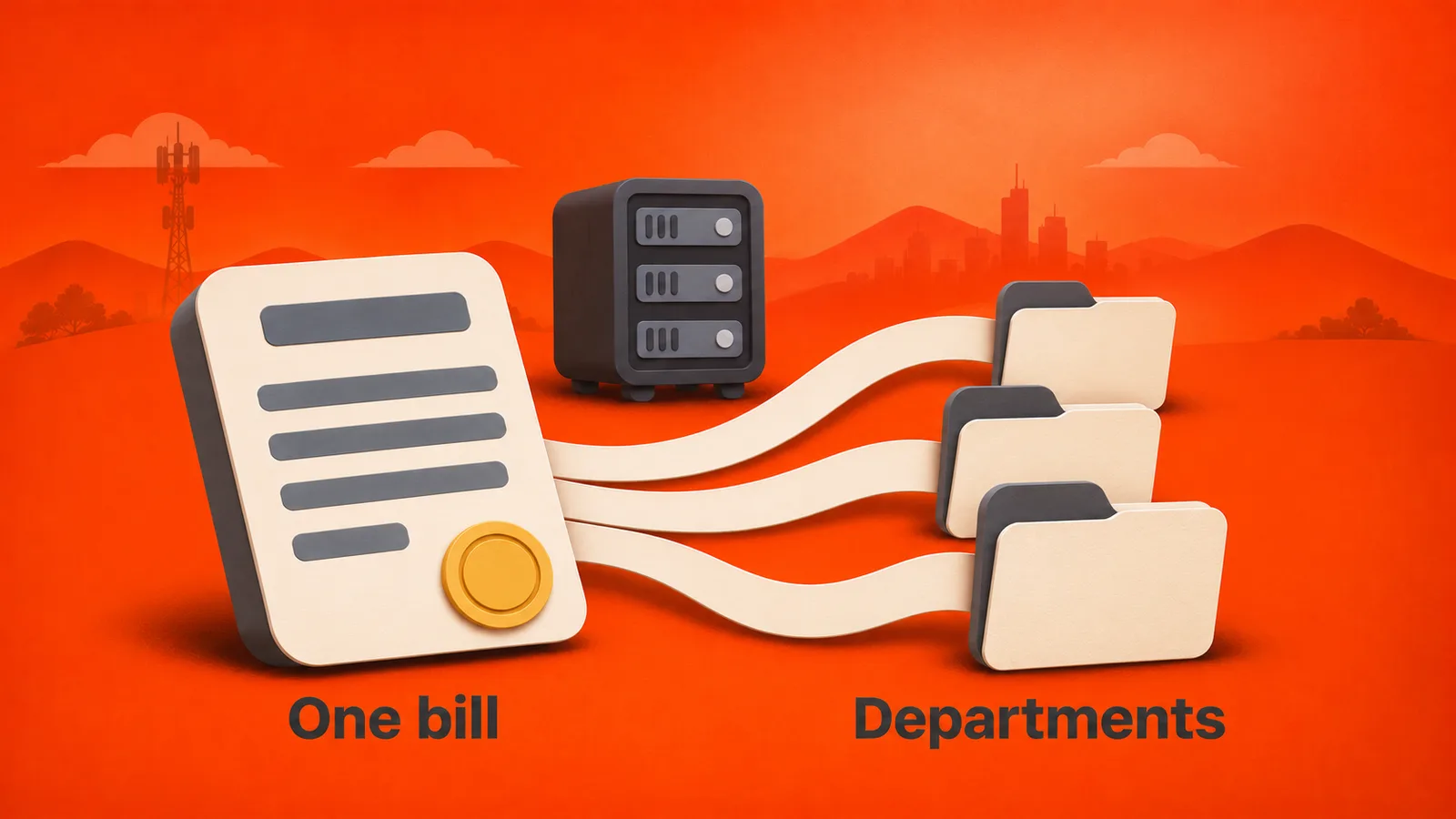
A parent account might receive the supplier bill while child accounts track departmental consumption. Another arrangement gives each customer its own invoice and payment responsibility. Record the arrangement explicitly. When a child moves between departments, change future allocation from an approved effective date instead of rewriting historical reports.
Shared fees need a documented rule. Allocate directly where a charge identifies its owner. For a shared amount, Finance can approve a fixed split or another explainable basis. The FinOps allocation capability describes defining a hierarchy, identifying which costs are shared and documenting how shared costs are apportioned. No single method is automatically fair for every telecom service . Integrating TEM records with employee management platforms helps keep line ownership and cost allocations current when employees join, transfer, or leave.
Allocation also depends on your mobility policy. It should say who may order, change or cancel a line, which department receives its cost, and how exceptions are approved. Those responsibilities need to survive employee transfers and account restructuring. For employee-owned phones, the stipend and reimbursement rules belong in the same policy; our BYOD guide covers that side.
Platforms that sell connectivity face the same hierarchy problem from the other direction. In the published RocketPhone case study, Spenza acted as MVNE and supplied carrier integration, eSIM provisioning, rating, billing, subscriber management and multi-tier reseller control through APIs. That documents delivered platform scope. It does not publish a telecom audit baseline or a recovered-credit total, and it should not be read as one.
What counts as a verified telecom audit result?
A verified result connects a finding to supporting records, an approved resolution and financial confirmation. A suspected overcharge remains an exception until the relevant terms and service facts are checked. An accepted dispute becomes a recovered amount only when Finance confirms the actual credit or refund and how it is booked.
Consider an illustrative review, with no assumed customer result. A service appears on an invoice after an internal cancellation request. First, check whether the supplier acknowledged the request and completed the disconnection. Then inspect notice periods, minimum commitments and the invoice’s service dates. A valid final-period charge may fully explain the mismatch.
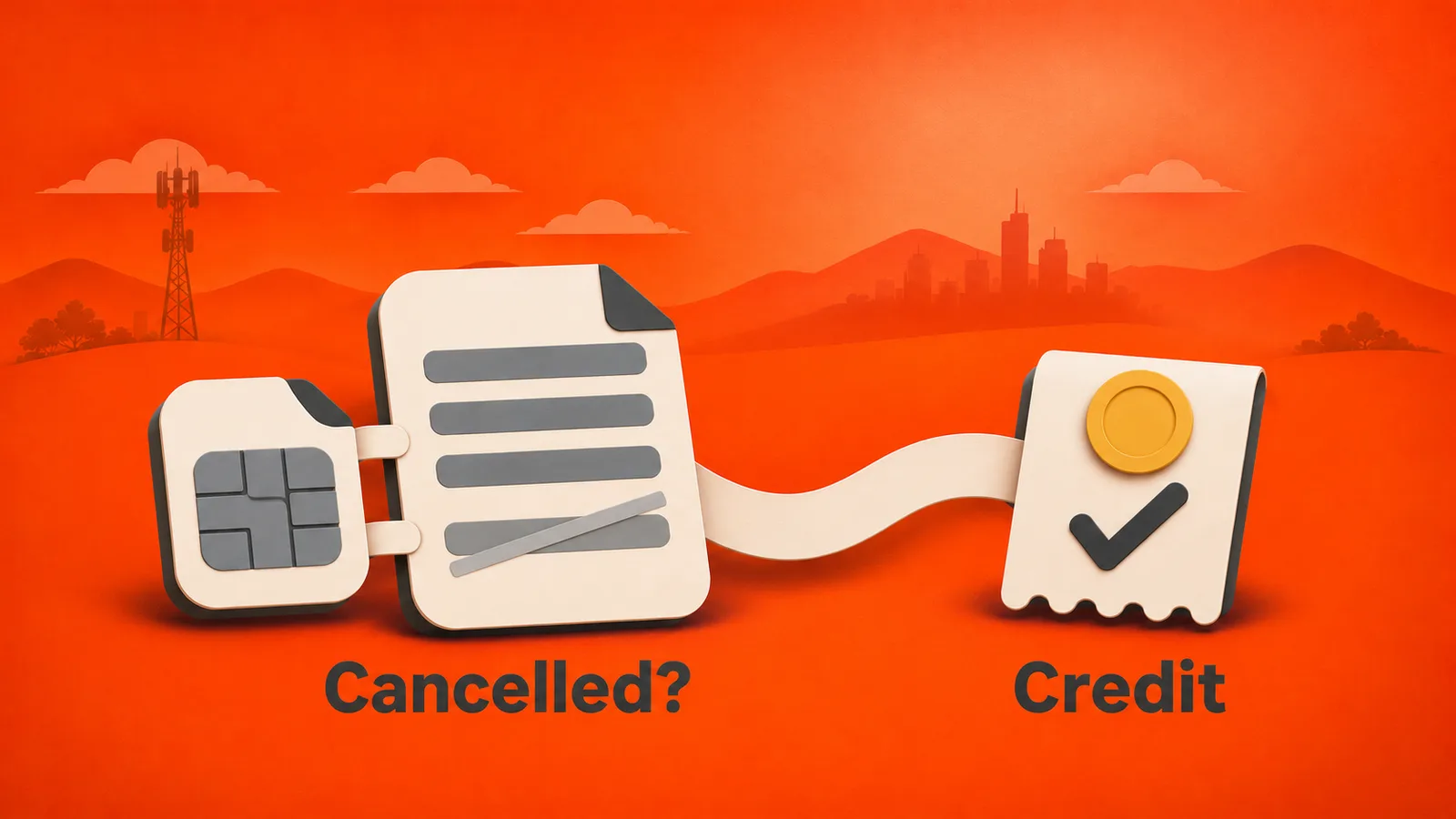
If the evidence supports a dispute, record the disputed line, the rationale, the owner and the supplier reference. Keep the amount requested separate from the amount accepted. When a credit appears, reconcile it to the original exception and check that later invoices reflect the corrected state. Do not count the same adjustment twice, once as a refund and again as recurring savings. Keep rejected disputes too: their explanations can correct an inventory rule or show that the wrong contract version was used. Our telecom compliance audits guide covers the regulatory side of audit evidence.
Watch out: keep expected, accepted and posted outcomes in separate columns of the management report. A proposed opportunity and a realized benefit should never share one.
Legal and tax questions depend on the contract and jurisdiction. Route uncertain notice, tax or regulatory interpretations to qualified specialists. TEM can organize evidence and approvals; software alone does not establish legal compliance or entitlement to a refund.
Should you run TEM with software, a managed service or both?
TEM can be handled in-house with software, outsourced to a managed service provider, or split between the two. Compare the work included in each model before comparing headline fees.
| Delivery model | Work to budget | Acceptance question |
|---|---|---|
| Software with internal operations | Subscription, integration, data cleanup and analyst time | Can our team close exceptions and maintain records? |
| Managed TEM service | Service fees, onboarding, retained approvals and specialist support | Who investigates, submits disputes and verifies outcomes? |
| Recovery-linked engagement | Agreed fee basis, eligible findings and reconciliation effort | What event earns a fee, and how is double counting prevented? |
Outsourcing is attractive when IT and Finance teams are pulled into bill reconciliation and employee service requests instead of work that grows the business. It works when responsibilities stay clear. A provider can collect invoices, investigate exceptions and handle supplier contact, while your own teams keep payment authority (Accounts Payable), contract interpretation (Procurement) and the decision whether a service is still needed (IT or operations).
Whichever model you choose, ask for these in writing:
- A responsibility matrix and an escalation path.
- Integration with HR or employee systems, so joiners, movers and leavers update inventory without manual re-keying.
- Spend thresholds and alerts by department, so budget holders hear about overspend before the invoice closes.
- Access controls and a described data-handling approach for invoice and contract data. Do not assume a provider is more secure than your own team, and do not assume it is less; ask to see how access is controlled.
- Exportable records and a documented handover when the engagement ends.
Global programs add one more benefit: pulling country or regional spend profiles into one view lets you compare policies between regions and see where costs concentrate. That only works if country-level invoices are normalized to the same fields.
How do you implement TEM without a failed rollout?
Start with a bounded service population, reliable source records and named decision owners. Accept the first rollout only when representative invoices, changes, allocations and exceptions can be traced through the process without unexplained gaps.
- Define the population. List suppliers, accounts, service types, countries and billing periods. State exclusions so a complete-looking dashboard does not hide unsupported accounts.
- Reconcile the opening inventory. Compare service exports, invoices and order records. Assign each unresolved difference to an owner rather than guessing which source is right.
- Load applicable terms. Keep amendments, renewal conditions and rate units with effective dates, and confirm who may interpret a disputed clause.
- Test representative work. Include an ordinary invoice, a partial-period change, a shared charge, a cancellation and a rejected exception.
- Agree the operating cadence. Review new exceptions, approaching renewals and overdue supplier actions. Record decisions and inspect the following invoice.
Measure invoice coverage, unresolved record gaps and completed actions using definitions agreed up front. A financial result needs a baseline, attribution and actual supporting transactions. When you evaluate vendors, have each one demonstrate a failed match as well as a successful one, and check these points:
Buyer checklist: line-level invoice imports, effective-dated terms, allocation history, exception ownership, approval boundaries and a complete data export.
How is TEM expanding into mobility, IoT and cloud?
Three changes are widening what TEM has to cover, and each one raises the value of good records.
- Mobility and BYOD. Corporate-liable and employee-owned devices need different cost rules. The policy decides who pays for what; TEM makes that decision auditable at scale. See the connectivity as a benefit approach for one way to handle it.
- IoT and eSIM. Sensors and connected devices add many low-usage lines on variable plans. These need metering, policy enforcement and a way to retire unused SIMs. Our IoT connectivity comparison and the guide to eSIM for enterprises explain the connectivity choices behind those lines.
- Cloud and collaboration services. Many organizations extend the same discipline to unified communications, SaaS and cloud spend, sometimes labeled technology expense management. Check which services a vendor’s connectors actually support; a product using the label does not establish coverage.
AI-assisted tools can help here too, by extracting invoice data and triaging exceptions. They still need defined authority and reliable evidence before they act on their own, as the FAQ below explains.
Conclusion: build TEM around decisions you can defend
Telecom expense management is a way to answer four questions on demand: which service exists, which terms apply, who owns its cost and what happened to each exception. Start with records and responsibilities, then test any software or managed service against real work from your own invoices. Expand only after the opening population reconciles and the approval process works.
Savings follow from completed actions, not from adopting a tool. Hold every vendor, and your own team, to the same standard: show the evidence, separate the expected from the confirmed, and keep the records that explain the next bill.
FAQs about telecom expense management
What is telecom expense management in simple terms?
Telecom expense management is the process of tracking what a company buys from its telecom suppliers, checking each bill against the contract and the services in use, and assigning every cost to an owner. It covers fixed and mobile services and continues after any audit, so new lines, cancellations and contract changes keep the records accurate.
What is the difference between TEM, WEM and MDM?
TEM covers telecom services broadly, wireless expense management (WEM) narrows that to mobile accounts, devices and plans, and mobile device management (MDM) configures and checks the devices themselves. The systems may share identifiers, but canceling a subscription does not remove work data from a handset, so define separate steps for employee departure and device retirement.
Can a spreadsheet support a TEM program?
A spreadsheet can work for a small, tightly controlled set of services when owners maintain identifiers, terms and change history reliably. The limit is usually workflow and evidence retention rather than arithmetic. Consider a platform when several people, suppliers or approval paths make reconciliation hard to reproduce, and weigh the migration effort against the subscription.
How much money should a buyer expect to recover?
No amount can be inferred from adopting TEM. Recoveries depend on your contracts, the billing errors present, dispute conditions and how the supplier resolves them. Set a baseline, verify each outcome against a posted credit, and ask any vendor to explain its fee basis without assuming every account holds recoverable overcharges.
Can artificial intelligence approve telecom invoices automatically?
AI can help extract invoice data and triage exceptions, but approval needs defined authority and reliable evidence. Test ambiguous line descriptions, missing amendments and duplicate records before allowing automated actions. Keep the source, the proposed decision and the approval history so an analyst can challenge a wrong recommendation.
Should a company outsource every TEM activity?
Outsource only where responsibilities and approvals stay clear. A provider can collect invoices and investigate exceptions while internal teams approve payments, confirm service need and interpret sensitive business requirements. Compare that split with your internal capacity, including escalation handling, access controls and the ability to export records when the service ends.
What does MACD mean and why does it matter?
MACD stands for move, add, change and disconnect, the day-to-day requests that alter lines, circuits and devices. Informal handling is a common cause of forgotten circuits and duplicate charges. A TEM program routes each request through an approval and records the supplier’s confirmation, so the next invoice can be checked against it.
Which data should stay available after a supplier change?
Keep historical invoices, applicable contracts, service identifiers, allocation rules and dispute outcomes under your retention policy. Preserve the mapping between old and new account identifiers. Without it, you cannot explain a prior payment or confirm that a later credit belongs to its original billing period.